

A family safari offers children and parents the chance to experience wildlife, landscapes and cultures together. Watching elephants move across an open plain or hearing lions calling after sunset can turn a family vacation into a powerful learning experience.
However, the best family-friendly safaris in Africa require thoughtful planning. Travel distances, lodge policies, children’s ages, health preparation and daily schedules all influence the quality of the trip.
This guide covers nine excellent safari destinations for American families, with special attention to Tanzania. It also explains how to select suitable accommodation, manage long journeys and build a comfortable itinerary around the needs of both adults and children.
Gowitos Safaris and Holidays creates private family safaris with flexible schedules, carefully selected lodges and professional guides.
Quick Comparison of Family Safari Destinations
| Destination | Country | Best for | Suggested age |
|---|---|---|---|
| Northern Tanzania | Tanzania | First safari and wildlife variety | Approximately 6+ |
| Serengeti | Tanzania | Big cats and Great Migration | Approximately 6+ |
| Ngorongoro Crater | Tanzania | Wildlife in a compact area | Approximately 5+ |
| Maasai Mara | Kenya | Big cats and open plains | Approximately 6+ |
| Madikwe | South Africa | Malaria-free family safari | All ages, lodge dependent |
| Eastern Cape | South Africa | Young children and flexible lodges | All ages, lodge dependent |
| Kruger region | South Africa | Big Five and lodge variety | Approximately 6+ |
| Okavango Delta | Botswana | Older children and wilderness | Approximately 8+ |
| Zanzibar extension | Tanzania | Beach relaxation after safari | All ages |
Age recommendations are general only. Every lodge, camp and activity provider has its own child policy, which must be confirmed before booking.
1. Northern Tanzania Safari Circuit
Northern Tanzania is one of the strongest choices for family-friendly safaris in Africa because several major wildlife destinations can be connected in one private road journey.
A family itinerary can include:
- Arusha National Park
- Tarangire National Park
- Lake Manyara National Park
- Ngorongoro Conservation Area
- Serengeti National Park
Traveling with one vehicle and driver-guide gives parents control over departure times, rest stops and the length of each wildlife drive. This flexibility is especially valuable when traveling with younger children.
A family can stop when the children become tired, return to the lodge earlier or spend more time watching an animal that has captured their interest.
Northern Tanzania also offers a wide choice of accommodation, ranging from comfortable family lodges to luxury camps and private villas.
Best for: First-time family safaris, children interested in animals and multigenerational trips.
2. Serengeti National Park, Tanzania
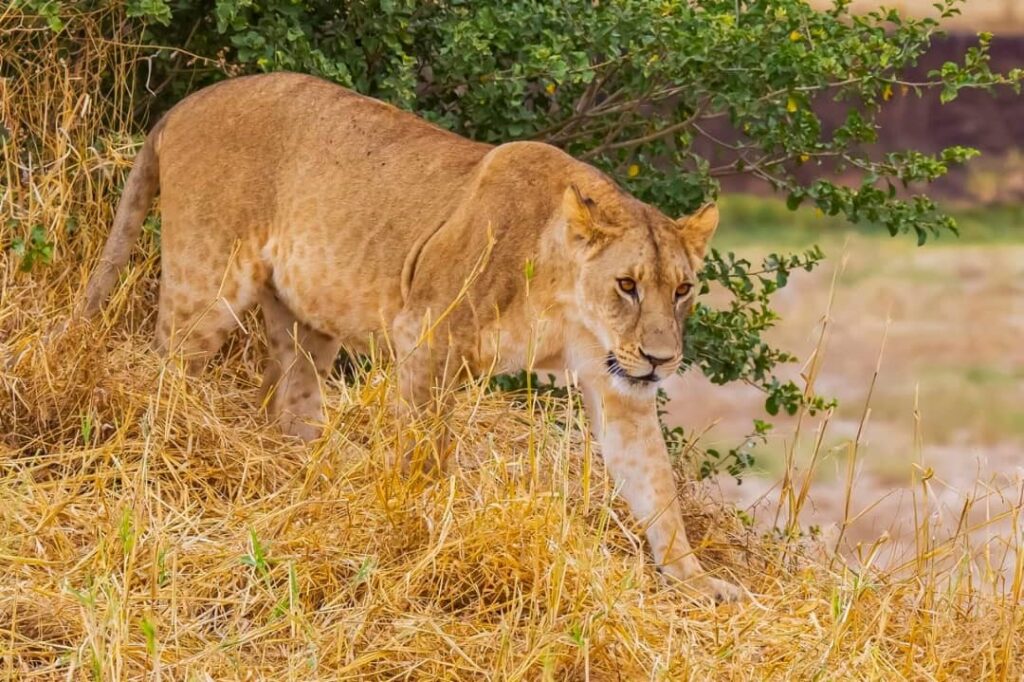
The Serengeti provides the classic African safari landscape many children recognize from books, documentaries and school lessons.
Its grasslands support lions, elephants, giraffes, zebras, wildebeest, cheetahs, hyenas and numerous bird species. The park is also part of the wider ecosystem used by the Great Migration.
A family safari in the Serengeti should normally include at least two or three nights. Spending more than one night reduces rushed travel and gives the family enough time to enjoy the landscape.
Families should select a camp that clearly welcomes children. Important questions include:
- Does the camp have family rooms?
- Are young children permitted on shared game drives?
- Can meals be served earlier?
- Is the camp fenced or unfenced?
- Is babysitting available?
- Are children’s activities offered?
- Can the family book a private safari vehicle?
Many safari lodges accept children, but minimum ages can vary from approximately four to twelve years. Families should therefore check the policy of each property rather than assuming every camp follows the same rules.
Best for: Big cats, Great Migration experiences and families with school-age children or teenagers.
3. Ngorongoro Crater, Tanzania
The Ngorongoro Crater is an excellent family destination because many animals can be seen within a relatively compact area.
After descending to the crater floor, families may encounter lions, buffaloes, zebras, wildebeest, hippos, hyenas, elephants and different antelope species. Black rhinos are also present, although sightings cannot be guaranteed.
The varied landscape helps keep children interested. Open grassland, wetlands, forest and lakes can all be explored during the same safari.
Temperatures around the crater rim can become cold, particularly during early mornings and evenings. Families should carry warm layers even when the rest of the Tanzanian itinerary is hot.
A crater safari is commonly combined with Tarangire and Serengeti rather than booked as a separate journey.
Best for: High wildlife density, shorter viewing distances and first-time safari families.
4. Tarangire National Park, Tanzania
Tarangire is famous for its baobab trees, elephants and the Tarangire River. It is located within convenient driving distance of Arusha, making it a practical first stop on a family safari.
Children often enjoy observing elephant family groups because their behavior can be easy to follow. Young elephants play, adults feed and the herd communicates as it moves through the landscape.
Tarangire also supports giraffes, zebras, wildebeest, lions, antelopes and many bird species. Wildlife concentrations are particularly strong around water sources during the dry season, although the park can be visited at different times of year.
A two-night stay allows families to explore without completing a long drive immediately after arriving in Tanzania.
Best for: Elephants, shorter transfers and a gentle introduction to safari.
5. Maasai Mara, Kenya
Kenya’s Maasai Mara is known for open grasslands, big cats and seasonal migration activity. It can be combined with the Serengeti, although this requires additional border or flight arrangements.
Several Mara camps provide family tents, flexible meals and activities designed for younger visitors. Some properties also offer children’s nature programs that introduce tracks, insects, birds and conservation.
For example, Governors’ Camp welcomes guests of different ages, provides family tents for up to five people and offers a children’s program. Policies differ across camps, so these facilities must be checked before reservation.
Families traveling with younger children should consider a private vehicle. Shared game drives may follow fixed schedules and can last longer than a young child finds comfortable.
Best for: Big cats, photography and Kenya–Tanzania combinations.

6. Madikwe Game Reserve, South Africa
Madikwe is frequently selected by families looking for a safari in a region considered free from malaria transmission.
The reserve is accessible from Johannesburg by road or light aircraft and contains elephants, lions, rhinos, buffaloes and other wildlife. Several properties specialize in family travel and offer family suites, children’s meals and age-appropriate activities.
Parents should still consult a qualified medical professional before travel. The description “malaria-free” applies to specific safari regions and should not be used to make general assumptions about an entire country.
Madikwe can be combined with Johannesburg or Cape Town for a varied South African vacation.
Best for: Families with young children and travelers seeking a malaria-free safari region.
7. Eastern Cape Game Reserves, South Africa
South Africa’s Eastern Cape contains several private game reserves that work well for families. It can also be combined with Cape Town and the Garden Route.
Family-friendly properties may provide:
- Interconnecting rooms
- Private family suites
- Flexible meal schedules
- Shorter wildlife drives
- Children’s conservation programs
- Babysitting
- Fenced lodge grounds
- Private vehicles
Addo Elephant National Park is another important attraction in the region. As its name suggests, elephants are a major highlight.
South African National Parks currently classifies children from 2 to 11 years under child rates, while those aged 12 and above pay adult rates. Individual private reserves and lodges set their own pricing and policies.
Best for: Younger children, self-drive extensions and family trips combining wildlife with Cape Town.
8. Kruger National Park and Private Reserves, South Africa
Kruger is one of Africa’s best-known wildlife destinations and offers a broad selection of rest camps, lodges and private reserves.
Families can choose between a self-drive journey, guided national-park safari or a fully hosted private-lodge experience. The region supports the Big Five as well as wild dogs, cheetahs, giraffes, zebras and numerous birds.
Private reserves around Kruger often provide open safari vehicles and highly personalized guiding. However, some shared wildlife drives do not accept very young children. A private vehicle may be required.
Parts of northeastern South Africa have malaria risk, so families should seek current medical guidance before traveling.
Best for: Big Five viewing, accommodation variety and families wanting to combine safari with other South African destinations.
9. Botswana’s Okavango Delta
Botswana is better suited to families with older children who are comfortable with small aircraft, remote camps and a stronger wilderness atmosphere.
The Okavango Delta offers a mixture of wildlife drives and seasonal water-based activities. Depending on water levels and camp location, travelers may explore by boat or mokoro.
Botswana’s low-volume tourism model and remote camps can make the journey expensive. Several properties also apply minimum ages for water activities, walking safaris or accommodation.
For families with teenagers, the Delta can provide an engaging experience that goes beyond conventional vehicle-based wildlife viewing.
Best for: Teenagers, experienced safari families and remote wilderness travel.
Add Zanzibar to a Family Safari
A beach extension can help children and parents rest after several days of early starts and road travel.
Zanzibar Island offers family resorts, tropical beaches, Stone Town, spice farms and marine activities.
Families can spend three to five nights on the island after visiting Tanzania’s northern parks. A direct domestic flight from the Serengeti or Arusha can simplify the journey.
When selecting a Zanzibar hotel, check:
- Family-room configuration
- Swimming-pool supervision
- Beach tides
- Children’s menus
- Distance from the airport
- Availability of medical assistance
- Babysitting or children’s activities
All foreign visitors entering Zanzibar are currently required to obtain the official mandatory inbound travel insurance, including children. Fees and requirements can change, so parents should use the official Zanzibar insurance portal before departure.
What Is the Best Age for an African Family Safari?
There is no single perfect age. A suitable age depends on the child’s attention span, health, interest in wildlife and ability to follow safety instructions.
Children Under 5
A safari is possible, but planning requires extra care. Select a fenced lodge, short road transfers, family rooms and a private vehicle. Confirm that the accommodation accepts young children before paying a deposit.
Children Aged 6–9
Children in this age group often respond well to shorter wildlife drives, active explanations and breaks at the lodge. A private safari vehicle gives the family valuable flexibility.
Children Aged 10–12
Older children can usually manage longer wildlife drives and understand more about animal behavior, ecosystems and conservation.
Teenagers
Teenagers may enjoy photography, cultural visits and more active experiences. Depending on the operator’s rules, activities could include guided walks, canoeing or specialist conservation experiences.
Walking-safari age limits commonly range between 12 and 16 years, but the rule depends on the destination and operator.
Sample 10-Day Tanzania Family Safari and Zanzibar Itinerary
Day 1: Arrival in Arusha
Meet your Gowitos representative at Kilimanjaro International Airport and transfer to a family-friendly hotel in Arusha.
Day 2: Tarangire National Park
Drive to Tarangire for your first wildlife experience. Look for elephants, giraffes, zebras and lions before continuing to your lodge.
Day 3: Tarangire to Karatu
Enjoy a relaxed morning safari before traveling to Karatu. The afternoon can be used for rest, swimming or a short cultural activity.
Day 4: Karatu to Serengeti
Travel through the Ngorongoro highlands and enter the Serengeti. Enjoy wildlife viewing on the way to the camp.
Day 5: Serengeti National Park
Explore the Serengeti with a flexible schedule. The family can return to camp for lunch or remain in the park with a picnic.
Day 6: Serengeti National Park
Spend a second day searching for lions, cheetahs, elephants and seasonal herds. Children can keep a wildlife checklist or photography journal.
Day 7: Serengeti to Ngorongoro
Enjoy a final Serengeti drive before traveling toward the Ngorongoro Conservation Area.
Day 8: Ngorongoro Crater
Descend into the crater for a half-day safari. Continue to Arusha or fly toward Zanzibar according to the final schedule.
Day 9: Zanzibar Beach
Enjoy a free family day at the beach or pool.
Day 10: Departure or Zanzibar Extension
Transfer to Zanzibar Airport or add further beach nights, a Stone Town visit or a spice-farm excursion.
How to Make a Safari Comfortable for Children
Use a Private Safari Vehicle
A private vehicle allows the guide to adjust the day around the children. Families can return early, take additional bathroom breaks or stop for a child’s favorite animal.
Avoid Changing Hotels Every Night
Frequent packing becomes tiring. Spending two or three nights in selected locations creates a calmer rhythm.
Include Swimming Pools and Rest Time
Children may enjoy wildlife drives more when the itinerary also gives them time to play and relax.
Carry Familiar Snacks
Bring suitable snacks for long driving days, while respecting customs and agricultural-entry rules. Inform Gowitos about allergies or dietary requirements before arrival.
Make Wildlife Viewing Interactive
Children can use:
- Binoculars
- Animal checklists
- Bird books
- Cameras
- Drawing books
- Safari journals
Keep Expectations Realistic
Wild animals follow natural patterns. No responsible safari operator can guarantee sightings of particular species.
Family Safari Safety
Parents and children must follow the guide’s instructions at all times.
Important rules include:
- Remain seated when the vehicle is moving.
- Keep hands and heads inside when instructed.
- Never feed wild animals.
- Do not leave the vehicle without the guide’s permission.
- Do not run around unfenced camps.
- Use an escort after dark when required.
- Keep room doors and tents properly closed.
- Never approach wildlife for photographs.
- Supervise children near pools and water.
- Keep noise controlled around animals.
At an unfenced camp, wildlife may move through the property. Children must never walk around alone.
Health Preparation for a Family Safari
Parents should consult a pediatrician or travel-medicine professional well before departure. Health advice should be based on the children’s ages, medical history and exact itinerary.
The CDC currently recommends malaria-prevention medicine for travelers visiting certain areas of Tanzania. The appropriate medication and dosage must be discussed with a qualified healthcare provider.
Families should also carry:
- Prescribed medication
- Copies of prescriptions
- Insect repellent suitable for each child’s age
- Sunscreen
- Sun hats
- Hand sanitizer
- Basic first-aid supplies
- Oral rehydration solution
- Comprehensive travel insurance details
A pre-travel consultation is important because vaccine and health recommendations vary by country, itinerary and individual traveler.
What to Pack for Children
A practical family packing list includes:
- Lightweight neutral-colored clothing
- Warm fleece or jacket
- Comfortable closed shoes
- Sandals for the lodge
- Sun hats
- Sunglasses
- Child-safe sunscreen
- Reusable water bottles
- Binoculars
- Small backpack
- Books or quiet travel games
- Swimwear
- Personal medication
- Copies of important documents
Soft-sided luggage is generally more practical when domestic flights are included.
Read the complete Safari Packing Guide.
What Is Included in a Gowitos Family Safari?
Depending on the confirmed package, inclusions may cover:
- Airport pickup and drop-off
- Private safari vehicle
- Professional English-speaking driver-guide
- Accommodation listed in the itinerary
- Family rooms when confirmed
- Meals specified in the itinerary
- National park entrance fees
- Scheduled wildlife drives
- Bottled drinking water during the safari
- Ngorongoro Crater fee when included
- Domestic flights when listed
- Government taxes
What Is Not Included?
Unless specifically stated, prices normally exclude:
- International flights
- Tanzania visa
- Personal travel insurance
- Zanzibar mandatory inbound insurance
- Vaccinations and medical costs
- Tips and gratuities
- Alcoholic drinks
- Optional activities
- Personal purchases
- Balloon safari
- Services not mentioned in the itinerary
Frequently Asked Questions
Are family-friendly safaris in Africa safe?
Yes, when the safari is professionally organized and families follow all safety instructions. Parents must supervise children, especially in unfenced camps and around swimming pools.
Is Tanzania suitable for a family safari?
Yes. Tanzania offers diverse wildlife, private safari vehicles and several parks that can be combined in one itinerary. Lodge policies must be checked against the children’s ages.
Can babies and toddlers go on safari?
Some lodges accept babies and toddlers, while others have minimum ages. Short drives, fenced accommodation and private vehicles are particularly important for very young children.
Are car seats available?
Child seats may be arranged when requested early, but families should provide the child’s age and weight. Availability and standards should be confirmed before travel.
Do children receive discounted safari rates?
Some parks, hotels and lodges provide child rates based on age. The final discount depends on room sharing, destination and the property’s policy.
Are family rooms available in safari lodges?
Yes, selected lodges offer family suites, connecting rooms or tents with additional beds. These room types are limited and should be reserved early.
How long should a family safari last?
Five to seven safari days are suitable for many first-time families. Adding three or four nights in Zanzibar creates a balanced wildlife-and-beach vacation.
Is a private or group safari better for families?
A private safari is usually more flexible. Families control the schedule and can take breaks without affecting unrelated guests.
What happens if a child becomes sick?
Guides and lodges can assist with access to available medical services, but distances may be considerable in remote areas. Comprehensive insurance with emergency evacuation coverage is strongly recommended.
When is the best time for a Tanzania family safari?
June through October offers generally dry conditions and is popular with families traveling during the US summer break. December holidays are also popular. Green-season travel can provide lower rates and fewer vehicles.
Can dietary requirements be accommodated?
Most lodges can arrange vegetarian, gluten-free or allergy-conscious meals with advance notice. Serious allergies must be clearly communicated during booking and again on arrival.
Can we combine safari with a cultural visit?
Yes. Families can add a respectful Maasai village experience or another community-led cultural activity.
Plan Your African Family Safari with Gowitos
The best family-friendly safaris in Africa balance wildlife viewing with comfort, safety, education and enough time to rest.
Gowitos Safaris and Holidays can design a private itinerary around your children’s ages, family-room requirements, school holidays and budget. We can also add Zanzibar, cultural visits or extra nights in Arusha.
WhatsApp: +255 769 100 815
Email: info@gowitossafarisandholidays.com
Contact us with your preferred dates, number of adults, children’s ages and desired destinations to receive a personalized family safari proposal.
