
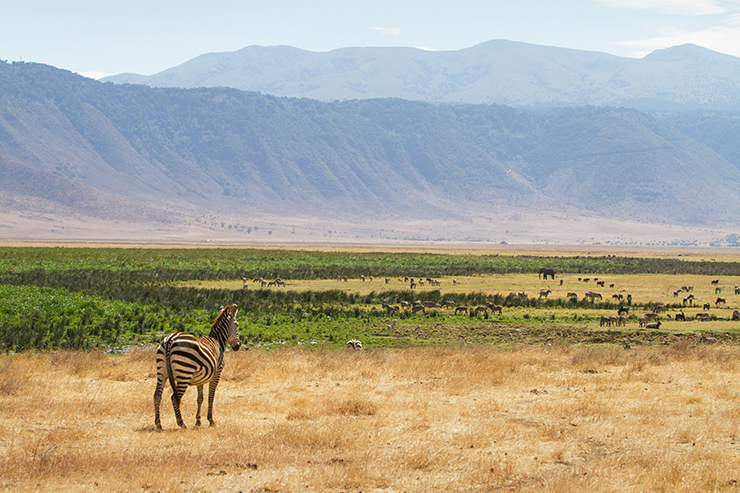
The Ngorongoro Conservation Area is one of northern Tanzania’s most varied safari destinations. It includes the world-famous Ngorongoro Crater, forested highlands, volcanic landscapes, archaeological sites, Maasai communities and the seasonal wildlife plains around Ndutu.
Unlike a conventional national park, the conservation area follows a multiple-land-use model. Wildlife conservation, tourism, archaeological protection and pastoralist communities share the wider landscape under regulated conditions.
The Ngorongoro Crater is the best-known attraction, but the conservation area extends far beyond the crater rim. Visitors can explore Olduvai Gorge, Empakaai Crater, Olmoti Crater, highland scenery and parts of the southern Serengeti ecosystem.
Gowitos Safaris & Holidays arranges private and group safaris through the Ngorongoro Conservation Area, including accommodation, professional guides, park fees and connections to Serengeti, Tarangire and Lake Manyara.
Ngorongoro Conservation Area Overview
The Ngorongoro Conservation Area is located west of the Great Rift Valley and forms an important part of Tanzania’s Northern Safari Circuit.
The protected landscape connects with Serengeti National Park and supports seasonal wildlife movement across the wider ecosystem. It also contains volcanic craters, open plains, forests, lakes and archaeological locations linked to early human history.
The main attractions include:
- Ngorongoro Crater
- Ndutu plains
- Olduvai Gorge
- Laetoli
- Empakaai Crater
- Olmoti Crater
- Ngorongoro highlands
- Lake Magadi
- Maasai cultural experiences
- Seasonal wildebeest calving
9 Amazing Ngorongoro Conservation Area Highlights
1. Ngorongoro Crater
The Ngorongoro Crater is the conservation area’s most famous attraction. It is the world’s largest intact volcanic caldera and contains a remarkable variety of wildlife habitats.
The crater floor covers approximately 260 square kilometres and lies about 600 metres below the rim. Its grassland, woodland, wetlands, freshwater pools and soda lake support numerous animals throughout the year.
Visitors may encounter:
- Lions
- Elephants
- Buffaloes
- Black rhinoceroses
- Spotted hyenas
- Wildebeests
- Zebras
- Gazelles
- Warthogs
- Hippos
- Jackals
- Waterbirds
Wildlife sightings remain natural and cannot be guaranteed.
2. Excellent Wildlife Viewing
The crater floor supports a high concentration of resident wildlife within a relatively compact area.
The open landscape allows visitors to observe several species during one game drive. Lions may be found resting in grassland, while spotted hyenas search for food across the plains.
Buffaloes, zebras and wildebeests are frequently seen. Large male elephants may move through the Lerai Forest, and hippos often gather in pools and wetland areas.
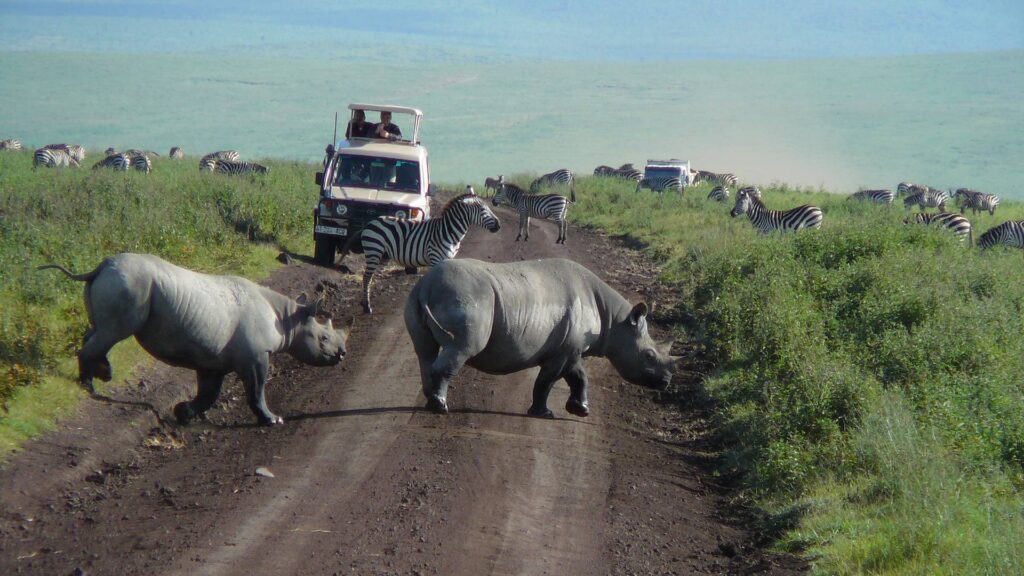
The endangered black rhinoceros may be seen at a distance, although sightings are never guaranteed.
3. The Lerai Forest
The Lerai Forest is a distinctive woodland area on the crater floor. Its trees and shaded environment provide food and shelter for wildlife.
Large male elephants are sometimes observed moving through the forest. Buffaloes, waterbucks and different bird species may also be present.
The vegetation is denser than the surrounding grasslands, making wildlife photography more challenging but visually rewarding.
Vehicles must remain on authorised roads and maintain a safe distance from animals.
4. Lake Magadi
Lake Magadi is a shallow alkaline lake located within the Ngorongoro Crater.
Its water level, colour and birdlife change according to rainfall and seasonal conditions. Flamingos may gather around the lake when feeding conditions are suitable.
Other birds can include:
- Storks
- Plovers
- Crowned cranes
- Herons
- Egrets
- Waders
- Birds of prey
The lake and surrounding grassland create excellent opportunities for landscape photography.
5. Ndutu and the Wildebeest Calving Season
Ndutu lies within the wider southern Serengeti ecosystem, partly extending into the Ngorongoro Conservation Area.
From approximately December to March, depending on rainfall, large wildebeest and zebra herds may gather across the short-grass plains.
The main calving period generally occurs between January and March. Large numbers of wildebeest calves may be born during a relatively short time.
This concentration attracts lions, cheetahs, spotted hyenas and other predators. The exact location and timing of the herds cannot be guaranteed because the Great Migration follows rainfall and fresh grazing.
6. Olduvai Gorge
Olduvai Gorge is one of the world’s important archaeological areas. Research conducted within the gorge has contributed greatly to understanding early humans and the environments in which they lived.
Visitors can stop at the museum and viewpoint while travelling between the Ngorongoro highlands and Serengeti National Park.
A visit may include:
- Museum exhibits
- Information about archaeological discoveries
- Views across the gorge
- Explanations from a local guide
- Geological and historical context
Olduvai Gorge normally requires an additional entrance arrangement and sufficient time within the itinerary.
7. Empakaai Crater
Empakaai Crater is located in the remote northern highlands of the Ngorongoro Conservation Area.
It contains a lake on its floor and is surrounded by steep, forested walls. On clear days, visitors may enjoy views towards Ol Doinyo Lengai and the surrounding highland landscape.
Guided hiking may be available under authorised arrangements. The trail can be steep and slippery, particularly after rain.
An Empakaai visit requires more time than a standard Ngorongoro Crater safari and is best included in a specialised highland itinerary.
8. Olmoti Crater
Olmoti is a smaller volcanic crater located in the highlands near Nainokanoka.
A guided walk may lead towards the crater rim and a waterfall created by water flowing from the crater. The landscape includes grassland, forest and pastoral areas.
The walk must be arranged with authorised guides and according to current conservation-area procedures.
Olmoti is suitable for travellers interested in hiking and quieter landscapes beyond the main crater.
9. Maasai Culture and Highland Landscapes
Maasai communities live within designated parts of the conservation area and continue pastoral traditions alongside the protected landscape.
Cultural visits may be arranged through approved communities and local guides. The experience should be respectful and should not treat people as photography objects.
Visitors should:
- Ask permission before taking photographs
- Follow the local guide’s instructions
- Avoid entering homes without invitation
- Agree on activity costs in advance
- Purchase crafts only when they genuinely want them
- Avoid making promises they cannot keep
- Respect livestock, private spaces and cultural practices
A properly managed visit can help travellers understand how people live within the wider conservation landscape.
Wildlife in the Ngorongoro Conservation Area
Lions
Lions are frequently observed on the crater floor and across the wider conservation area.
They may rest in grassland, follow grazing animals or gather around woodland. During warmer hours, they can remain inactive for long periods.
Black Rhinoceroses
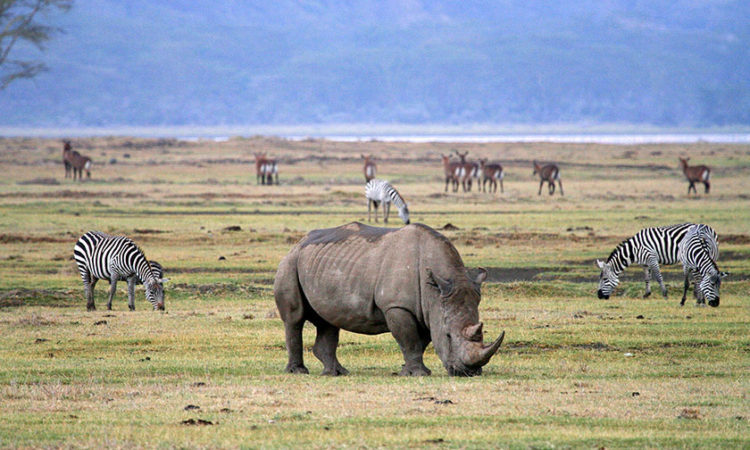
The crater provides an opportunity to look for endangered black rhinoceroses.
They are often observed at a distance and may remain in areas far from the road. Binoculars and a telephoto lens are useful.
No responsible guide can guarantee a rhinoceros sighting.
Elephants
Older male elephants are often seen on the crater floor, particularly around wooded areas. Family groups may be more common within the wider highlands and surrounding ecosystems.
Buffaloes
Buffaloes live in several crater habitats and may form large herds. They are commonly found near grassland, forest and water.
Leopards
Leopards occur in the wider conservation area but are rarely seen on a standard crater game drive. Forested areas around the rim may provide suitable habitat.
Cheetahs
Cheetahs may be observed in open landscapes within the wider conservation area, particularly around Ndutu and the short-grass plains.
Spotted Hyenas
Spotted hyenas are common within the crater and play an important role as both hunters and scavengers.
They may be seen alone, in groups or competing with lions over food.
Grazing Animals
Common herbivores include:
- Wildebeests
- Zebras
- Thomson’s gazelles
- Grant’s gazelles
- Elands
- Warthogs
- Waterbucks
Their distribution changes according to water, grazing and seasonal movement.
Birdwatching
The conservation area supports varied birdlife because of its forests, lakes, grasslands and wetlands.
Birds that may be observed include:
- Flamingos
- Ostriches
- Kori bustards
- Secretary birds
- Crowned cranes
- Storks
- Herons
- Egrets
- Vultures
- Eagles
- Buzzards
- Waterfowl
Birdwatching is rewarding throughout the year, with migratory species adding variety during wetter periods.
Best Time to Visit the Ngorongoro Conservation Area
The area can be visited throughout the year.
January to March
This is an important period for the Ndutu plains and seasonal wildebeest calving.
The crater remains accessible, while the wider landscape is generally green.
April and May
The long rains create lush scenery and fewer visitors. Roads may become muddy, and mist can reduce visibility around the crater rim.
June to October
These are generally the drier months. Wildlife viewing inside the crater remains reliable, and roads may be easier to use.
Mornings around the crater rim can be very cold.
November and December
Short rains refresh the grasslands and may encourage migration herds to move towards the southern ecosystem.
Rain normally falls in periods rather than throughout every day, although conditions vary.
Ngorongoro Crater Day Tour
A crater day tour can begin from Arusha, Karatu or another confirmed pickup location.
From Arusha
A day trip from Arusha requires a very early departure and includes several hours of driving in each direction.
From Karatu
Starting from Karatu reduces travel time and allows earlier access to the crater.
Typical Programme
A standard crater tour may include:
- Early-morning pickup
- Drive to the conservation area
- Crater-rim viewpoint
- Descent to the crater floor
- Morning game drive
- Picnic lunch
- Afternoon wildlife viewing
- Ascent to the crater rim
- Transfer to the next destination
The amount of time allowed on the crater floor depends on current regulations and the confirmed itinerary.
How Many Days Should You Spend in Ngorongoro?
One Day
Suitable for a crater game drive within a wider safari itinerary.
Two Days
Allows time for the crater and another attraction, such as Olduvai Gorge, a cultural visit or a highland walk.
Three or More Days
Suitable for travellers exploring Empakaai, Olmoti, Ndutu and remote highland areas.
The wider conservation area should not be treated as only a short stop between Arusha and Serengeti.
Accommodation
Crater-Rim Lodges
Lodges around the crater rim provide convenient access and, from selected locations, crater views.
These properties are often among the more expensive accommodation options.
Highland Lodges
Properties around the highlands offer access to the crater while providing a quieter environment.
Karatu Accommodation
Karatu has budget, mid-range and luxury lodges. Staying outside the conservation area may reduce accommodation costs but adds morning driving time.
Ndutu Camps
Seasonal and permanent camps operate around Ndutu, particularly during the calving period.
Camping
Public and special campsites may be available under applicable regulations. Facilities vary and should be confirmed before travel.
How to Reach the Ngorongoro Conservation Area
From Arusha
Most road safaris travel from Arusha through Makuyuni, Mto wa Mbu and Karatu.
From Lake Manyara
Ngorongoro can easily be combined with Lake Manyara because the destinations are connected through Karatu and the Rift Valley region.
From Tarangire
Visitors commonly travel from Tarangire to Karatu before visiting the crater the following morning.
From Serengeti
The road between Serengeti and Ngorongoro passes through the wider conservation area and near Olduvai Gorge.
By Air
Flights may operate to airstrips serving Lake Manyara, Ndutu and the Serengeti. Road transfers are still required for many Ngorongoro properties and activities.
Combining Ngorongoro with Other Destinations
The conservation area can be combined with:
- Serengeti National Park
- Tarangire National Park
- Lake Manyara National Park
- Arusha National Park
- Lake Eyasi
- Lake Natron
- Mount Kilimanjaro
- Mount Meru
- Zanzibar
Popular safari itineraries include:
- Two days in Tarangire and Ngorongoro
- Three days in Serengeti and Ngorongoro
- Four days in Tarangire, Serengeti and Ngorongoro
- Five days in Lake Manyara, Tarangire, Serengeti and Ngorongoro
- Seasonal Ndutu and Ngorongoro calving safaris
What to Wear and Carry
Recommended items include:
- Comfortable neutral-coloured clothing
- Warm jacket or fleece
- Closed shoes
- Sun hat
- Sunglasses
- Sunscreen
- Insect repellent
- Camera
- Spare batteries
- Memory cards
- Binoculars
- Personal medication
- Passport or identification
- Small day bag
- Light rain jacket
- Chargers and power bank
- Reusable water bottle where appropriate
The crater rim can be cold and misty while the crater floor may become warmer later in the day. Dressing in layers is advisable.
Responsible Travel Guidelines
Visitors should follow conservation-area regulations and their guide’s instructions.
Responsible behaviour includes:
- Remaining on authorised roads
- Never feeding animals
- Maintaining a safe distance from wildlife
- Keeping noise low
- Avoiding crowding around sightings
- Not calling animals for photographs
- Keeping rubbish inside the vehicle
- Respecting Maasai residents
- Requesting permission before photographing people
- Avoiding unauthorised walking
- Using approved guides for hikes and cultural visits
Wildlife conservation, community respect and visitor safety must take priority over photographs.
Frequently Asked Questions
Is Ngorongoro a national park?
No. It is a conservation area managed under a multiple-land-use system rather than a conventional national park.
Is the Ngorongoro Crater the entire conservation area?
No. The conservation area also includes highlands, archaeological sites, Ndutu plains, Empakaai, Olmoti and community areas.
Can I see the Big Five?
The crater provides opportunities to see lions, elephants, buffaloes and black rhinoceroses. Leopards occur in the wider area but are not commonly seen during crater game drives.
Are black rhinoceroses guaranteed?
No. They may remain far from roads or be difficult to see.
Can children visit Ngorongoro?
Yes. The crater is suitable for families, although parents should consider driving time and cold morning conditions.
How long does a crater game drive take?
The game drive normally uses the permitted crater access period within the planned itinerary. Exact timing depends on current regulations.
Is the crater crowded?
It can become busy during peak travel periods. Entering early may provide a quieter experience.
Can visitors walk inside the crater?
Normal visitors remain inside safari vehicles except at authorised locations. Walking activities take place only in approved areas with authorised guides.
Is Ndutu inside Serengeti National Park?
The wider Ndutu ecosystem crosses administrative boundaries, with important areas located within the Ngorongoro Conservation Area.
Can I visit from Zanzibar?
Yes. Travellers can fly to Arusha, Kilimanjaro, Lake Manyara or another suitable airstrip before continuing by road.
Do I need travel insurance?
Comprehensive travel insurance is strongly recommended. It should cover medical treatment, evacuation, cancellation, delays and personal belongings.
Why Visit with Gowitos Safaris & Holidays?
Gowitos Safaris & Holidays is a locally based Tanzanian company arranging wildlife safaris, Kilimanjaro climbs, day trips and Zanzibar holidays.
The team plans Ngorongoro itineraries around realistic driving times, accommodation location and current conservation-area procedures.
Your professional driver-guide will explain the wildlife, volcanic landscape and wider conservation system while following responsible viewing practices.
Plan Your Ngorongoro Conservation Area Safari
Ngorongoro Conservation Area: 9 Amazing Safari Highlights brings together outstanding wildlife, volcanic scenery, Maasai culture, archaeology and the seasonal migration plains around Ndutu.
To receive an accurate itinerary and quotation, provide your preferred dates, number of travellers, children’s ages, accommodation category and other destinations you want to include.
Contact Gowitos Safaris & Holidays to plan your Ngorongoro safari.
WhatsApp: +255 769 100 815
Email: info@gowitossafarisandholidays.com
