
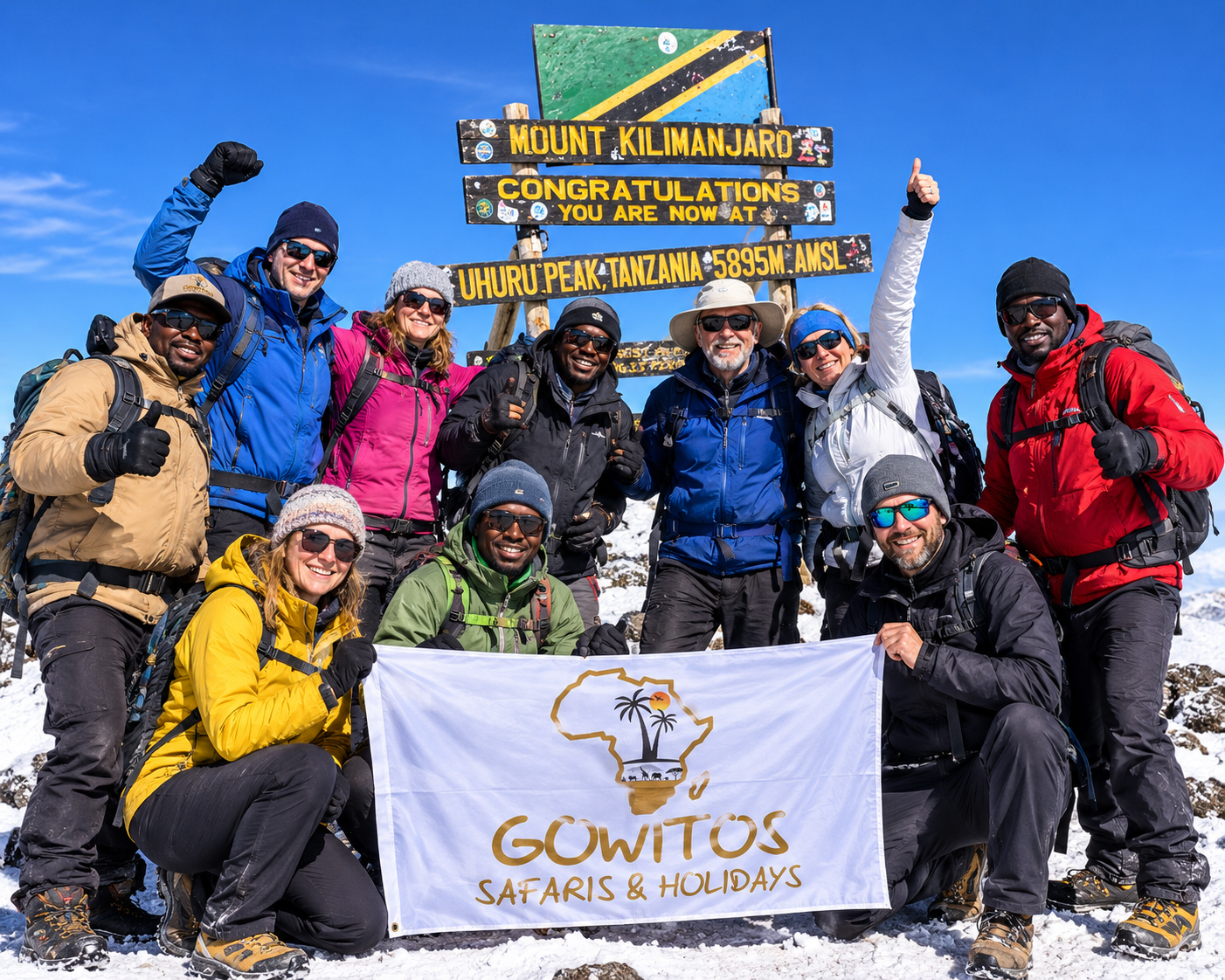
Kilimanjaro Climbing Success Rate: 7 Facts to Know
Climbing Mount Kilimanjaro is an extraordinary adventure, but reaching its summit is not guaranteed. Standing at 5,895 metres above sea level, Mount Kilimanjaro is Africa’s highest mountain, and its altitude presents a significant challenge even to physically fit trekkers.
One of the most common questions among prospective climbers is: What is the Kilimanjaro climbing success rate?
The answer depends on several factors, including the route selected, the number of days spent on the mountain, acclimatisation, altitude-related symptoms and the quality of the trekking arrangements.
At Gowitos Safaris and Holidays, we help climbers plan their Kilimanjaro adventures with suitable routes, professional mountain guides and carefully organised trekking itineraries. This guide explains the available summit statistics, compares climbing durations and shares practical advice to help you prepare for your climb.
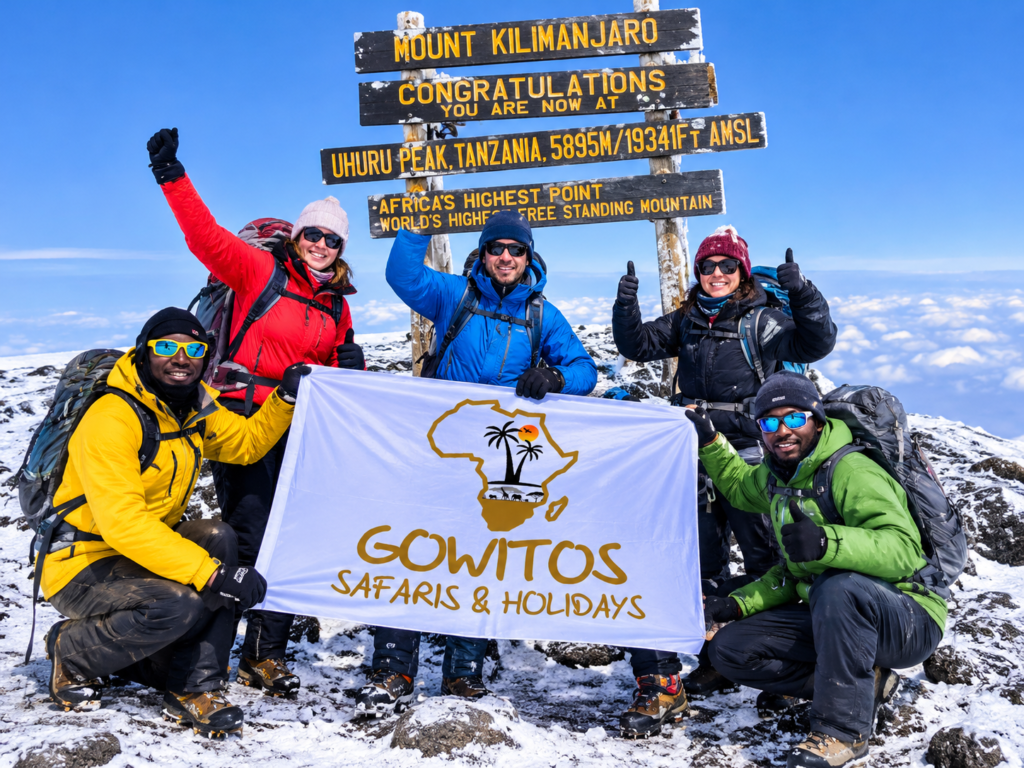
1. What Is the Kilimanjaro Climbing Success Rate?
The Kilimanjaro climbing success rate refers to the percentage of climbers who successfully reach Uhuru Peak at 5,895 metres, the highest point on Mount Kilimanjaro.
There is no single current, independently verified success-rate figure that applies to every climber and every tour operator. Published statistics vary because research studies use different routes, participant groups, climbing durations and definitions of summit success.
A prospective cohort study published in the Journal of Travel Medicine in 2022 followed 1,237 recreational hikers between December 2019 and March 2020. It reported that 87.9% reached Uhuru Peak. The study also found that climbing over more days was associated with a better chance of reaching the summit.
However, this was the result of a particular study population and should not be interpreted as a guaranteed success rate for every Kilimanjaro expedition.
The important lesson is that your itinerary and acclimatisation strategy can make a meaningful difference.
2. How Does Climbing Duration Affect Summit Success?
The number of days you spend climbing Kilimanjaro is one of the most important planning considerations.
Your body needs time to adapt to decreasing oxygen availability as you gain altitude. A rushed ascent can increase the risk of altitude illness and make the summit attempt more difficult.
Longer itineraries generally provide more opportunities to acclimatise gradually. This is why an additional day or two on the mountain can be a worthwhile investment.
Consider the following general planning comparison:
| Climbing duration | Acclimatisation opportunity | Planning recommendation |
|---|---|---|
| 5 days | Limited | Not recommended for most first-time climbers |
| 6 days | Relatively limited | Requires careful route planning |
| 7 days | Better | A more balanced option |
| 8 days | More time to adapt | Recommended where practical |
| 9 days or more | Extended acclimatisation opportunity | Excellent option for a gradual itinerary |
These are planning categories, not guaranteed summit-success percentages. Individual results vary according to the route profile, health, altitude response and other conditions.
For many climbers, choosing a longer itinerary is more beneficial than selecting the shortest available package simply to reduce costs.
3. Which Kilimanjaro Route Has the Best Summit Success Potential?
Kilimanjaro has several established climbing routes, each with different scenery, durations, accommodation arrangements and acclimatisation profiles.
The best route depends on your experience, available time, budget and personal preferences.
Lemosho Route
The Lemosho Route is one of the most popular choices for climbers looking for beautiful scenery and a gradual approach to the mountain.
- Typical duration: 7–8 days
- Accommodation: Mountain camps
- Difficulty: Moderate to challenging
- Highlights: Remote landscapes, Shira Plateau and spectacular mountain views
The longer Lemosho itineraries provide useful acclimatisation opportunities and are worth considering for climbers who have sufficient time.
Northern Circuit Route
The Northern Circuit is the longest established route on Kilimanjaro and offers a quieter approach around the northern slopes.
- Typical duration: 8–9 days
- Accommodation: Mountain camps
- Difficulty: Moderate to challenging
- Highlights: Remote trails, panoramic views and a gradual approach
Its longer duration gives climbers more time to adjust to altitude. It is an excellent option for those prioritising a gradual ascent.
Machame Route
The Machame Route, sometimes called the Whiskey Route, is known for its dramatic scenery and varied terrain.
- Typical duration: 6–7 days
- Accommodation: Mountain camps
- Difficulty: Moderate to challenging
- Highlights: Shira Plateau, Lava Tower and Barranco Wall
The seven-day itinerary generally provides more time for acclimatisation than the six-day option.
Marangu Route
The Marangu Route is often called the Coca-Cola Route. It is the only standard Kilimanjaro route with mountain hut accommodation.
- Typical duration: 5–6 days
- Accommodation: Mountain huts
- Difficulty: Challenging
- Highlights: Mandara Hut, Horombo Hut and Kibo Hut
Although the shorter five-day itinerary is available, the six-day option provides an additional acclimatisation day and is generally preferable.
Rongai Route
The Rongai Route approaches Kilimanjaro from the northern side, close to the Kenyan border.
- Typical duration: 6–7 days
- Accommodation: Mountain camps
- Difficulty: Moderate to challenging
- Highlights: Quieter trails, northern landscapes and views of the mountain
It is an alternative for climbers who prefer a less crowded approach.
Umbwe Route
The Umbwe Route is a steep and demanding approach suited to experienced trekkers who understand the challenges of rapid altitude gain.
- Typical duration: 6–7 days
- Accommodation: Mountain camps
- Difficulty: Very challenging
- Highlights: Steep forest trails and dramatic mountain scenery
Because of its demanding ascent profile, it is not usually the first recommendation for climbers prioritising gradual acclimatisation.
4. Seven Important Factors That Influence Kilimanjaro Summit Success
Reaching Uhuru Peak requires more than physical fitness. Several factors can influence how your body responds to the mountain.
1. Proper acclimatisation
Acclimatisation allows your body to adapt to the reduced oxygen availability at higher elevations. Choose an itinerary that allows a gradual ascent and sufficient time on the mountain.
2. Physical preparation
Prepare before travelling to Tanzania. Regular walking, hiking, stair climbing, cycling and cardiovascular exercise can help develop endurance.
You do not need to be an elite athlete, but you should be comfortable walking for several hours over consecutive days.
3. Walking at a steady pace
Mountain guides commonly use the Swahili expression pole pole, meaning slowly.
Walking at a controlled pace helps prevent unnecessary exhaustion and supports a more gradual ascent.
4. Hydration and nutrition
Drink fluids regularly and eat sufficient food throughout the climb. Appetite can decrease at altitude, so follow your guide’s advice about meals and hydration.
5. Experienced mountain guides
A professional mountain team helps manage the daily trekking schedule, monitor climbers and respond to changing mountain conditions.
All Kilimanjaro climbs must be organised through licensed operators in accordance with park regulations.
6. Recognising altitude sickness
Altitude sickness can affect anyone, regardless of age, fitness or previous hiking experience.
Common symptoms include headache, nausea, dizziness, fatigue and difficulty sleeping. Severe symptoms require urgent medical assessment and descent.
Never continue ascending when you have symptoms that your guide or medical professional considers unsafe.
7. A realistic summit strategy
The summit attempt usually begins during the night, when climbers leave their high camp and proceed towards the crater rim before continuing to Uhuru Peak.
Cold temperatures, fatigue, wind and altitude can make this the most demanding part of the expedition. A suitable itinerary and a properly managed ascent are essential.
5. Is Physical Fitness Enough to Guarantee Reaching Uhuru Peak?
No. Physical fitness is important, but it does not guarantee summit success.
Kilimanjaro is a high-altitude mountain, and altitude illness can affect experienced hikers as well as beginners.
A person who regularly exercises may still experience difficulty adjusting to the altitude. Equally, a moderately fit trekker may perform well when following an appropriate itinerary and acclimatising gradually.
Before your climb:
- Build endurance through regular hiking and walking.
- Practise walking uphill and on uneven terrain.
- Wear and test your hiking boots before travelling.
- Prepare for cold temperatures and changing weather.
- Seek medical advice before the expedition, particularly if you have existing health concerns.
- Discuss altitude-sickness prevention with a qualified healthcare professional.
Medication such as acetazolamide may be appropriate for some climbers, but it should only be considered after medical advice. It does not replace gradual acclimatisation or safe climbing practices.
6. What Happens If You Cannot Reach the Summit?
Not every climber reaches Uhuru Peak, and turning back is sometimes the safest decision.
Your mountain guides monitor your condition throughout the expedition. If you develop concerning altitude-related symptoms, severe exhaustion or another medical problem, they may recommend stopping the ascent and descending.
Some climbers reach Stella Point or Gilman’s Point but do not continue to Uhuru Peak. These are important milestones on the crater rim, but they are not the same as reaching the highest point of the mountain.
Your safety must always come before summit achievement.
A responsible climbing operator should never pressure a client to continue when the conditions or their health make further ascent unsafe.
7. When Is the Best Time to Climb Kilimanjaro?
Kilimanjaro can be climbed throughout much of the year, but some periods generally offer more favourable trekking conditions.
The main recommended climbing seasons are:
January to mid-March: This period often offers relatively favourable weather, although conditions can change at high altitude.
June to October: These months are generally popular because of the drier conditions and good trekking opportunities.
The long rainy season usually occurs around March to May, while shorter rains are commonly experienced around November and December.
Weather on the mountain is unpredictable. Even during the drier months, climbers should prepare for rain, wind, cold temperatures and possible snow near the summit.
Kilimanjaro Climbing Packages with Gowitos Safaris & Holidays
Choosing the right itinerary is an important part of preparing for a successful Kilimanjaro adventure.
Gowitos Safaris & Holidays is a Tanzania-owned local tour operator and destination management company based in Arusha. We organise Mount Kilimanjaro trekking packages for international travellers looking to experience Africa’s highest mountain.
Our climbing arrangements include:
- Private Kilimanjaro climbing expeditions.
- Different routes and trekking durations.
- Professional mountain guides and mountain crew.
- Mountain accommodation arrangements according to the selected route.
- Pre-climb planning and practical preparation guidance.
- Airport transfers and accommodation arrangements on request.
- Safari extensions before or after your climb.
Our safari vehicles are Toyota Land Cruisers configured for a maximum of six guests, with pop-up roofs and guaranteed window seats. These vehicles can also be arranged for suitable safari extensions.
Choose Your Kilimanjaro Climbing Route
Whether you prefer the scenic Lemosho Route, the longer Northern Circuit, the popular Machame Route or the hut-based Marangu Route, we can help you compare the available itineraries.
We encourage climbers to consider acclimatisation, safety and the overall trekking experience rather than choosing a package based only on price.
Request Your Kilimanjaro Climbing Quote
Contact Gowitos Safaris & Holidays to discuss your preferred route, travel dates, group size and climbing experience.
Website: https://gowitossafarisandholidays.com
Email: info@gowitossafarisandholidays.com
WhatsApp: +255 769 100 815
Plan your Kilimanjaro adventure with a local Tanzania tour operator and take the first step towards Uhuru Peak.
Frequently Asked Questions About Kilimanjaro Climbing Success Rate
What is the average Kilimanjaro climbing success rate?
There is no single current, independently verified average for all Kilimanjaro climbers. A 2022 prospective study reported that 87.9% of its 1,237 recreational hikers reached Uhuru Peak. Results from individual operators and other studies can differ.
Which Kilimanjaro route has the highest summit success rate?
Longer itineraries, particularly those allowing 8–9 days or more, offer more time for acclimatisation. The Northern Circuit is a strong option for climbers prioritising a gradual ascent. No route guarantees reaching the summit.
Is a five-day Kilimanjaro climb recommended?
A five-day climb is a short itinerary with limited acclimatisation time. Most climbers should consider a longer option, particularly if they have no previous high-altitude trekking experience.
Does being physically fit guarantee reaching Uhuru Peak?
No. Physical fitness improves endurance, but it does not prevent altitude sickness. Acclimatisation, health, route profile and individual responses to altitude all influence summit success.
How many days should I spend climbing Kilimanjaro?
Seven to nine days is a useful planning range for many climbers. The most appropriate duration depends on the selected route and its ascent profile. Longer itineraries can provide additional acclimatisation opportunities.
What is the difference between Stella Point and Uhuru Peak?
Stella Point is on the crater rim at approximately 5,739 metres, while Uhuru Peak is the highest point at 5,895 metres. Reaching Stella Point does not mean a climber has reached Uhuru Peak.
Can beginners climb Mount Kilimanjaro?
Yes. Beginners can climb Kilimanjaro if they prepare properly, select an appropriate route and follow a suitable acclimatisation schedule. Previous technical mountaineering experience is not normally required on the standard trekking routes.
What happens if I experience altitude sickness?
You should report symptoms to your mountain guide immediately. Do not continue ascending if you have symptoms that have not resolved. Severe altitude-related symptoms require immediate descent and urgent medical attention.
Is Kilimanjaro climbing safe?
Kilimanjaro climbing involves risks, particularly altitude illness, extreme weather and physical exhaustion. Choosing a licensed operator, following guide instructions, allowing adequate acclimatisation and descending when medically necessary can help reduce risks.
