
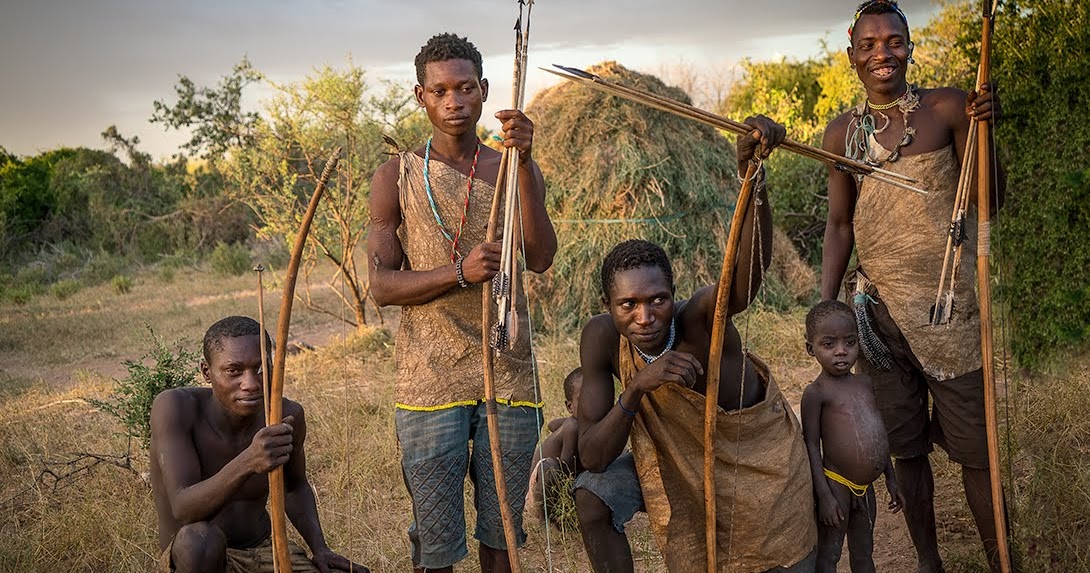
A Hadzabe and Datoga cultural tour introduces travellers to two distinct communities living around Lake Eyasi in northern Tanzania. The experience combines cultural learning, walking, traditional skills, local food and the dramatic scenery of the Great Rift Valley.
The Hadzabe, also known as the Hadza, are recognised for their hunter-gatherer traditions and extensive knowledge of the natural environment. The Datoga are traditionally associated with livestock keeping, farming and skilled metalwork. Although the communities live in the same wider region, their languages, histories and social traditions are different.
Lake Eyasi is a shallow seasonal salt lake situated on the floor of the Great Rift Valley, southwest of the Ngorongoro Highlands. Tanzania’s official tourism information identifies the Hadzabe and Datoga among the communities living in this region.
A responsible visit should never treat local people as exhibits. It should be based on community consent, fair payment, respectful photography and genuine cultural exchange.
Where Do the Hadzabe and Datoga Live?
Many Hadzabe and Datoga communities live around Lake Eyasi and the surrounding valleys of northern Tanzania.
Lake Eyasi is located southwest of the Ngorongoro Conservation Area and south of the Serengeti ecosystem. The landscape includes acacia woodland, rocky hills, seasonal streams, grassland and palm-lined sections near the lake.
The lake’s water level changes significantly according to rainfall. During dry periods, parts of the lake may shrink and reveal broad areas of salt and mud. During wetter months, the surrounding vegetation becomes greener and bird activity may increase.
Travellers normally reach Lake Eyasi through Karatu, making the destination easy to add to a northern Tanzania safari.
Understanding the Hadzabe Community
The Hadzabe are one of Tanzania’s indigenous communities. Some Hadza families continue to depend partly on hunting, gathering wild plants, collecting honey and sharing food within their camps.
Their language, Hadzane, is distinct and includes click sounds. It is not simply a version of a neighbouring language, and its continued use is an important part of Hadza cultural identity.
The community has detailed knowledge of:
- Animal tracks
- Seasonal water sources
- Wild fruits and roots
- Medicinal plants
- Honey collection
- Weather patterns
- Natural materials
- Bow and arrow construction
Not every Hadza person lives in exactly the same way. Communities are contemporary and adapt to changing conditions, education, tourism, land pressures and contact with neighbouring groups.
Visitors should avoid describing the Hadzabe as people who are “frozen in time.” They are living communities making their own choices in modern Tanzania.
Understanding the Datoga Community
The Datoga are a culturally diverse group found in several parts of northern and central Tanzania. Communities around Lake Eyasi are known for pastoral traditions, agriculture and skilled craftsmanship.
Some Datoga artisans recycle metal to produce tools, arrowheads, knives, jewellery and household items. During a cultural visit, travellers may observe a blacksmith shaping heated metal with traditional tools.
The Datoga are also recognised for their knowledge of livestock, leatherwork and adapting to the dry landscapes around Lake Eyasi.
As with the Hadzabe, Datoga families do not all follow one identical lifestyle. Occupations, education and everyday routines vary between households and locations.
9 Powerful Hadzabe and Datoga Cultural Experiences
1. Join an Early-Morning Hadzabe Bush Walk
A Hadzabe experience commonly begins early in the morning before the heat becomes intense. Accompanied by a local community member and interpreter, visitors may walk through the bush while learning about animal tracks, edible plants and seasonal water sources.
The route changes according to the location of the community, weather and daily activities. This is not a staged nature trail with a fixed schedule.
Participants should be prepared to walk over uneven ground. Closed shoes, lightweight clothing, drinking water and sun protection are essential.
The purpose of the walk is to learn directly from Hadza environmental knowledge while respecting the pace and decisions of the community.
2. Learn Traditional Tracking Skills
Hadzabe hunters can recognise small signs that many visitors would overlook. A faint footprint, broken twig, bird call or disturbed patch of soil may provide information about nearby animals.
During the walk, community members may explain how they identify tracks and determine an animal’s direction, size or recent movements.
Tracking knowledge is developed through observation and years of experience. Travellers should approach the demonstration as a learning opportunity rather than a performance arranged only for entertainment.
Visitors may also see traditional bows and arrows and learn how they are made from locally available materials.
3. Understand Hunting and Gathering Traditions
Some Hadzabe families continue to obtain food through hunting and gathering. Depending on the day, visitors may learn about collecting wild fruits, roots, berries or honey.
A traditional hunting walk may also form part of the experience. Travellers should understand that this is a real subsistence activity rather than a guaranteed wildlife-viewing excursion.
No animal sighting or successful hunt can be promised. Visitors should discuss the activity in advance if they have personal concerns about observing subsistence hunting.
Guests do not hunt animals themselves. They follow at the community’s invitation and must respect all safety instructions.
4. Try Traditional Archery
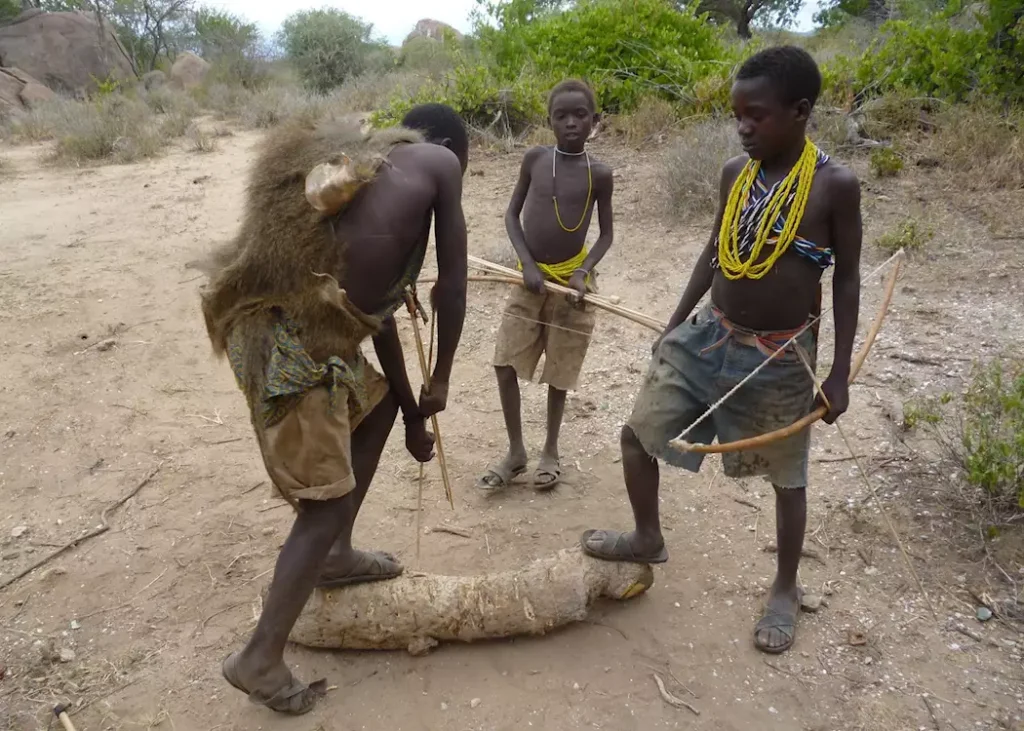
Community members may demonstrate how a Hadzabe bow is held and how arrows are aimed. Visitors may then be invited to practise with a safe target in a controlled location.
Traditional archery requires concentration, balance and skill. What appears simple can be surprisingly difficult for a beginner.
Participation should always be supervised. Visitors must never handle arrows or bows without permission, and children should be closely monitored.
This activity provides a practical appreciation of the skill involved in making and using traditional hunting equipment.
5. Listen to Hadzabe Language and Songs
Language is an important part of Hadza identity. The Hadzane language contains distinctive click sounds that visitors may hear during conversation, storytelling or songs.
An interpreter can explain greetings and simple words, allowing respectful communication between guests and community members.
Depending on the visit, travellers may hear songs connected with daily life, social gatherings or storytelling. Participation may be welcomed, but visitors should follow the community’s lead rather than requesting performances without context.
The experience becomes more meaningful when guests listen, ask thoughtful questions and allow community members to choose what they want to share.
6. Visit a Datoga Homestead
A Datoga visit provides a different cultural perspective from the morning spent with the Hadzabe.
At a homestead, travellers may learn about family organisation, livestock, food preparation, traditional clothing and the construction of local houses.
A guide or interpreter helps visitors communicate and understand the meaning of different objects and practices.
Travellers must remember that a homestead is a private family space. They should not enter buildings, touch possessions or photograph residents without clear permission.
A well-organised visit allows conversation and learning without disrupting normal household activities.
7. Watch Datoga Metalworkers
Traditional metalworking is one of the best-known Datoga cultural experiences around Lake Eyasi.
Artisans may recycle scrap metal and heat it over a charcoal fire. Using hammers, stones and simple tools, they can shape the material into bracelets, rings, knives, arrowheads and useful household objects.
The demonstration reveals considerable technical knowledge. Metal temperature, timing and repeated hammering all influence the final product.
Visitors may have an opportunity to purchase locally produced crafts. Buying directly from the artisan can provide income to the household, but bargaining should remain polite and reasonable.
8. Learn About Datoga Livestock Traditions
Livestock plays an important role in the lives of many Datoga families. Cattle, goats and sheep can provide food, economic security and social value.
During a visit, community members may explain how animals are cared for, how grazing decisions are made and how families respond to changing rainfall and water availability.
The experience can also open a discussion about the challenges facing pastoral communities, including access to land, drought and changing economic conditions.
Visitors should avoid making assumptions that pastoral life is simple or unchanged. Livestock management requires detailed environmental knowledge and constant decision-making.
9. Explore the Lake Eyasi Landscape
A Hadzabe and Datoga tour can include time to appreciate Lake Eyasi’s landscape and birdlife.
The shallow seasonal lake is surrounded by Rift Valley scenery, woodland and agricultural areas. Tanzania Tourism notes that the region is well suited to exploration on foot and that the long rains of April and May can affect visits.
Depending on water levels and season, visitors may observe:
- Flamingos
- Pelicans
- Storks
- Herons
- Lovebirds
- Kingfishers
- Birds of prey
- Waterfowl
Bird numbers and lake conditions change throughout the year, so no particular species should be guaranteed.
Is Visiting the Hadzabe and Datoga Ethical?
A cultural visit can be ethical when communities are involved in planning the experience, provide informed consent and receive fair financial benefits.
Responsible tourism should create an exchange rather than turning everyday life into a spectacle.
A suitable operator should:
- Work with recognised community representatives.
- Use a trained local interpreter.
- Pay agreed community and guide fees.
- Ask permission before taking photographs.
- Avoid pressuring people to perform.
- Keep group sizes manageable.
- Respect private spaces and ceremonies.
- Explain cultural expectations before arrival.
- Avoid distributing gifts randomly.
- Allow community members to control the visit.
Visitors should be cautious of descriptions such as “primitive,” “Stone Age tribe” or “untouched people.” These terms reduce complex modern communities to outdated stereotypes.
The Hadzabe and Datoga have valuable cultural traditions, but they are also citizens of present-day Tanzania with individual opinions, ambitions and changing lifestyles.
Best Time for a Hadzabe and Datoga Tour
Lake Eyasi can be visited for much of the year, although weather and road conditions influence the experience.
June to October: Dry Season
The dry season usually offers easier road access and comfortable conditions for early-morning walks.
Advantages include:
- Lower rainfall
- Easier walking conditions
- More predictable road access
- Convenient combination with a wildlife safari
- Clear mornings and dry landscapes
Daytime temperatures can become hot, so activities should begin early.
November to March: Green Season
Seasonal rains bring greener scenery and increased birdlife. Short showers may occur, but cultural visits are usually still possible.
The landscape can be especially attractive for photography during this period.
Road conditions should be checked after heavy rainfall, particularly when travelling beyond the main village areas.
April and May: Long Rains
April and May usually receive heavier rain. Some roads can become muddy or difficult, and activities may need to be adjusted.
Tanzania’s tourism authority identifies these months as the more questionable period for visiting Lake Eyasi because of the long rains.
Travellers should confirm access and accommodation before booking during this period.
How to Reach Lake Eyasi
From Karatu
Karatu is the most convenient starting point for a Hadzabe and Datoga experience. The drive generally takes approximately two hours, but the actual journey depends on road conditions, weather and the location of your accommodation.
An overnight stay near Lake Eyasi is recommended because Hadzabe activities usually begin around sunrise.
From Arusha
Travelling directly from Arusha requires a much longer day. The journey can take several hours in each direction, depending on traffic and road conditions.
A two-day itinerary provides a more comfortable experience than attempting the entire visit as a rushed day trip from Arusha.
From Ngorongoro or Lake Manyara
Lake Eyasi can be added after a safari in the Ngorongoro Highlands or Lake Manyara National Park.
It also works well before continuing toward Serengeti National Park.
A four-wheel-drive safari vehicle is recommended, especially during rainy periods.
Suggested 2-Day Hadzabe and Datoga Itinerary
Day 1: Karatu to Lake Eyasi
After breakfast, depart from Karatu and travel toward Lake Eyasi.
Enjoy views of farms, villages and the Great Rift Valley landscape along the way. After arriving at your lodge or camp, have lunch and time to rest.
Later, take a guided walk near the lake or visit a local agricultural area, depending on weather and community arrangements.
Return to your accommodation for dinner and an early night.
Day 2: Hadzabe and Datoga Cultural Experience
Wake before sunrise and travel with your local guide to meet a Hadzabe community.
Join an early-morning bush walk and learn about tracking, plants, honey collection and traditional archery. The exact activities depend on what community members are doing that morning.
After the Hadzabe visit, continue to a Datoga homestead. Learn about livestock, household life and metalworking. Watch skilled artisans turn recycled metal into tools, jewellery or arrowheads.
Return to the lodge for breakfast or lunch before travelling to Karatu, Ngorongoro or your next safari destination.
What Is Normally Included?
A professionally organised Hadzabe and Datoga tour may include:
- Private safari vehicle
- Professional driver-guide
- Local cultural guide
- Interpreter
- Community fees
- Cultural activities
- Accommodation stated in the itinerary
- Meals stated in the itinerary
- Drinking water
- Government taxes
- Return transfers from the agreed location
Exact inclusions must be confirmed in your personalised quotation.
What Is Normally Excluded?
The tour price may exclude:
- International flights
- Tanzania visa
- Travel insurance
- Personal expenses
- Alcoholic and bottled soft drinks
- Tips for guides and community hosts
- Additional accommodation
- Activities not listed in the itinerary
- Laundry services
- Medical expenses
- Items of a personal nature
What to Pack for Lake Eyasi
Recommended items include:
- Lightweight neutral clothing
- Comfortable closed walking shoes
- Sun hat
- Sunglasses
- High-SPF sunscreen
- Insect repellent
- Refillable water bottle
- Camera
- Binoculars
- Small day bag
- Personal medication
- Light rain jacket
- Respectful clothing for community visits
Avoid wearing military-style camouflage clothing. Bright or revealing clothes are also less appropriate for rural community visits.
Photography and Cultural Respect
Always ask before photographing people. Consent for one photograph does not automatically include permission to record videos or publish someone’s image commercially.
Visitors should:
- Ask through the local guide.
- Accept “no” without questioning.
- Avoid photographing children without guardian permission.
- Never photograph private ceremonies without approval.
- Show people their photographs when practical.
- Avoid intrusive close-up images.
- Do not use drones without official and community permission.
- Never exchange sweets or money directly for photographs without guidance.
Randomly handing gifts to children can create conflict and encourage begging. Anyone wishing to support the community should discuss suitable contributions with the tour operator and community representatives.
Combining Lake Eyasi with a Tanzania Safari
A Hadzabe and Datoga tour can easily be included in a northern circuit safari.
Popular combinations include:
- Lake Manyara, Ngorongoro and Lake Eyasi
- Tarangire, Lake Eyasi and Ngorongoro
- Serengeti, Ngorongoro and Lake Eyasi
- Arusha, Tarangire and Lake Eyasi
- A longer Tanzania safari followed by Zanzibar
Travellers can read our Tanzania Safari Guide for additional information about planning routes, choosing accommodation and preparing for a Tanzania holiday.
Frequently Asked Questions
Who are the Hadzabe?
The Hadzabe, or Hadza, are an indigenous Tanzanian community associated with the Lake Eyasi region. Some community members continue to practise hunting and gathering alongside other modern economic activities.
Who are the Datoga?
The Datoga are a culturally diverse Tanzanian community traditionally associated with livestock keeping, agriculture and craftsmanship. Some Datoga artisans around Lake Eyasi are known for metalworking.
Are the Hadzabe and Datoga the same community?
No. They have different languages, histories, traditions and social identities. They live within the same wider region but should not be presented as one cultural group.
Can visitors join a Hadzabe hunting trip?
Visitors may sometimes accompany community members on a subsistence walk. The activity is controlled by the Hadzabe hosts, and guests do not hunt animals themselves. A successful hunt is never guaranteed.
Is the experience staged for tourists?
Some demonstrations, such as archery practice or metalworking explanations, may be organised so visitors can learn safely. However, responsible tours should reflect real knowledge and community life rather than forcing artificial performances.
How many days are needed at Lake Eyasi?
One overnight stay and an early-morning visit provide a good introduction. Two nights allow more time for cultural activities, walking and relaxation.
Can children join the tour?
Yes, but parents should consider the early start, heat, uneven walking terrain and sensitive nature of subsistence activities. Children must remain under adult supervision.
Can I take photographs?
Yes, but only after receiving permission. Your guide will explain when photography is appropriate and when cameras should remain packed away.
Should I bring gifts?
Do not distribute gifts directly without guidance. It is better to ask the operator or community representative what type of support is appropriate.
Is Lake Eyasi part of Ngorongoro?
No. Lake Eyasi is a separate destination southwest of the Ngorongoro Highlands, although the two locations can easily be combined in one itinerary.
Plan Your Hadzabe and Datoga Tour with Gowitos
A Hadzabe and Datoga cultural tour adds valuable human context to a Tanzania wildlife safari. It provides an opportunity to listen, learn and understand how different communities use environmental knowledge, craftsmanship and cooperation in their daily lives.
Gowitos Safaris and Holidays can arrange a respectful private visit to Lake Eyasi with local guides and interpreters. Your itinerary can be combined with Tarangire, Lake Manyara, Ngorongoro, Serengeti or other destinations.
Visit Gowitos Safaris and Holidays to explore additional cultural and wildlife experiences.
Contact Gowitos Safaris and Holidays
- WhatsApp: +255 769 100 815
- Email: info@gowitossafarisandholidays.com
- Website: gowitossafarisandholidays.com
