
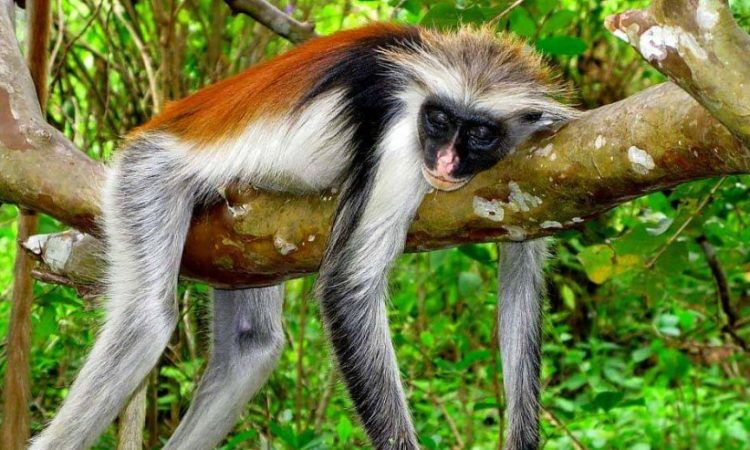
Explore one of Zanzibar’s most important natural areas on a guided Jozani Forest Tour. Located within Jozani Chwaka Bay National Park, the forest is best known as the home of the Zanzibar red colobus monkey, a rare primate found naturally only in the Zanzibar archipelago.
During the tour, you will walk beneath the forest canopy with a trained local guide, search for monkeys and learn about native trees, medicinal plants and the surrounding ecosystem. Most visits also include the mangrove boardwalk, where you can discover how mangrove forests protect Zanzibar’s coastline and provide habitat for many species.
The experience is suitable for couples, families, friends, photographers and travellers interested in wildlife, nature and conservation.
Jozani Forest Tour Overview
| Tour details | Information |
|---|---|
| Destination | Jozani Chwaka Bay National Park |
| Location | Central-southern Zanzibar |
| Tour duration | Approximately 2–3 hours inside the park |
| Tour style | Private transfer with a guided forest walk |
| Main attraction | Zanzibar red colobus monkeys |
| Other highlights | Forest trails, native plants and mangrove boardwalk |
| Difficulty | Easy to moderate |
| Suitable for | Couples, families, friends and nature lovers |
| Availability | Throughout the year |
| Starting point | Your Zanzibar hotel |
Why Visit Jozani Forest?
Zanzibar is widely known for its beaches, but its natural heritage extends beyond the coastline. A Jozani Forest Tour provides an opportunity to experience the island’s woodland, primates, plants and mangrove ecosystem.
The forest walk is not a zoo visit. The monkeys and other animals move freely through their natural habitat, and sightings depend on their location and behaviour during your visit.
Tour highlights include:
- Searching for Zanzibar red colobus monkeys
- Walking through a protected tropical forest
- Learning about native trees and medicinal plants
- Visiting the mangrove boardwalk
- Observing wildlife in its natural habitat
- Discovering Zanzibar’s conservation efforts
- Travelling with a knowledgeable local guide
- Taking nature and wildlife photographs
- Combining the tour with other Zanzibar attractions
- Enjoying an easy half-day excursion
Zanzibar Red Colobus Monkeys
The Zanzibar red colobus is the leading attraction in Jozani Forest. It is an endemic primate, meaning it occurs naturally only within the Zanzibar archipelago.
These monkeys are social and are often seen in family groups. They spend time feeding, resting, grooming and moving between trees. Their diet mainly consists of leaves, young shoots, flowers and other plant material.
Red colobus monkeys may appear relaxed around visitors, but they remain wild animals. Guests should maintain a respectful distance and avoid interfering with their natural behaviour.
Important viewing rules include:
- Never feed the monkeys
- Do not touch or attempt to hold them
- Avoid surrounding a monkey group
- Do not use flash at close range
- Keep noise to a minimum
- Follow the guide’s instructions
- Supervise children carefully
- Do not block the monkeys’ path
- Avoid close-up selfies with wildlife
- Never chase an animal for a photograph
Quiet observation provides a safer and more natural wildlife experience.
Other Wildlife in Jozani Forest
Although the red colobus monkey is the main attraction, the forest supports other wildlife.
Depending on the season, time of day and natural movement, visitors may encounter:
- Sykes or blue monkeys
- Bushbabies
- Small antelope
- Bush pigs
- Butterflies
- Forest birds
- Lizards
- Insects
- Crabs around the mangrove area
Many forest animals are shy, nocturnal or difficult to locate. No specific wildlife sighting can be guaranteed.
Your guide may also point out tracks, feeding signs, nests and other evidence of animals that are not immediately visible.
The Mangrove Boardwalk
The mangrove boardwalk is an important part of the Jozani Forest Tour.
Mangroves grow in coastal areas influenced by saltwater and tides. Their specialised root systems help them survive in wet, muddy and salty conditions.
During the walk, your guide may explain how mangroves:
- Protect coastlines from erosion
- Provide nursery areas for young fish
- Create habitat for crabs and other animals
- Store carbon
- Filter sediment
- Support local marine ecosystems
- Reduce the impact of waves
- Connect land and coastal habitats
The boardwalk allows visitors to explore the mangrove area without trampling the fragile roots and muddy forest floor.
Access may occasionally change because of maintenance, tides or local park conditions.
Detailed Jozani Forest Tour Itinerary
Pick-Up From Your Zanzibar Hotel
Your driver will collect you from your hotel at the agreed time.
Transfer time depends on your accommodation location. Jozani Forest is conveniently positioned for guests staying in Paje, Jambiani, Bwejuu, Michamvi and other parts of southern or eastern Zanzibar.
Guests staying in Stone Town, Nungwi or Kendwa should allow additional driving time.
The journey provides views of local villages, farms and everyday island life before you arrive at Jozani Chwaka Bay National Park.
Arrival and Registration
After arriving at the park entrance, your guide will assist with registration and entrance procedures.
A local forest guide will provide a short briefing about:
- The walking route
- Wildlife-viewing rules
- Forest safety
- Photography
- Responsible behaviour
- The expected duration of the visit
The exact route may change according to trail conditions and the current location of the monkeys.
Guided Forest Walk
Begin your walk beneath the forest canopy.
Your guide will introduce the different habitats found within the area and explain the importance of the forest to Zanzibar’s biodiversity. You may see tall trees, palms, ferns, climbing plants and shaded forest clearings.
The guide may also identify selected plants that local communities have traditionally used for medicine, food, building materials or household purposes.
The pace is generally comfortable, with stops for explanations, wildlife observation and photography.
Paths can become muddy or slippery after rainfall, so suitable footwear is recommended.
Searching for Red Colobus Monkeys
Your guide will search areas where red colobus groups are currently active.
Once the monkeys are located, you will have time to observe them from a respectful distance. They may be feeding in the canopy, resting on branches, grooming one another or moving between trees.
The length of the encounter depends on the animals’ behaviour and park guidelines. Visitors should remain calm and allow the monkeys to move freely.
Photographs are welcome, but the welfare of the animals must come before getting a close image.
Mangrove Boardwalk Experience
After the forest walk, continue to the mangrove area when access is available.
Follow the raised wooden boardwalk through the mangrove habitat while your guide explains how the trees survive in tidal conditions. You may see exposed roots, crabs, small fish and other signs of coastal life.
The mangrove walk provides a noticeable contrast to the main forest and shows how different Zanzibar habitats are connected.
Return to Your Hotel
After completing the tour, meet your driver for the return journey to your hotel.
You may also continue to another pre-arranged destination, such as Paje Beach, Jambiani, Kizimkazi or a local cave.
This marks the end of your Jozani Forest Tour.
Best Time to Visit Jozani Forest
Jozani Forest can be visited throughout the year.
June to October
These months generally bring drier conditions and comfortable walking weather. Trails may be less muddy, although Zanzibar remains warm.
December to February
The weather is often hot and sunny. Morning visits can provide more comfortable temperatures.
March to May
This is normally the wetter period. The forest becomes lush and green, but trails may be muddy or slippery. Heavy rain can affect walking conditions.
November
Short seasonal rains may occur, but visits often continue between showers.
Morning and late-afternoon visits can be cooler. However, the best time may also depend on your other activities and hotel location.
Wildlife sightings are possible at different times because the monkeys move freely through the forest.
The Jozani Forest Tour can be organised privately or as part of a shared excursion.
Private Jozani Forest Tour
A private tour provides a vehicle and driver for your party. It offers greater flexibility with hotel pick-up time, travel pace and combination activities.
The forest walk may still include other visitors because Jozani is a public protected area.
Private arrangements are suitable for:
- Couples
- Families
- Honeymooners
- Groups of friends
- Photographers
- Travellers with limited time
- Guests combining several attractions
A shared tour allows you to travel with other guests. This may reduce the cost per person, but the pick-up time, route and schedule are usually fixed.
Your confirmation will state whether transport and guiding arrangements are private or shared.
What Is Included?
- Hotel pick-up and return transfer when specified
- Private or shared vehicle as confirmed
- Professional local driver
- Jozani Forest entrance fee
- Guided forest walk
- Red colobus monkey viewing
- Mangrove boardwalk visit when accessible
- Drinking water
- Government and local charges stated in the booking
- Support from Gowitos Safaris and Holidays
What Is Not Included?
- International or domestic flights
- Zanzibar accommodation
- Tanzania visa fees
- Zanzibar entry insurance
- Meals unless specifically included
- Alcoholic and soft drinks
- Tips for the guide and driver
- Personal purchases
- Additional activities
- Travel and medical insurance
- Medical treatment
- Items not listed under inclusions
What to Bring
Recommended items include:
- Comfortable walking shoes
- Lightweight clothing
- Sun hat
- Sunglasses
- Sunscreen
- Insect repellent
- Reusable water bottle
- Camera or smartphone
- Binoculars
- Light rain jacket
- Small daypack
- Personal medication
- Hand sanitiser
- Small amount of local currency
Shoes with a good grip are useful during the rainy season because sections of the trail can become slippery.
What to Wear
Wear light, comfortable clothing suitable for walking in warm and humid conditions.
Neutral colours can be useful for nature observation. Long trousers may provide protection against insects and vegetation. Closed shoes are recommended, particularly after rainfall.
Zanzibar has a predominantly Muslim culture, so modest clothing is appreciated when travelling through villages and public areas.
Safety During the Forest Walk
The tour is generally suitable for visitors with a basic level of mobility. Guests should still follow safety instructions.
Important guidance includes:
- Remain with your guide
- Stay on authorised trails
- Do not feed or touch wildlife
- Watch for roots and uneven ground
- Take care on wet or slippery surfaces
- Use handrails on the boardwalk where available
- Keep children under supervision
- Carry essential medication
- Inform the guide about mobility concerns
- Do not remove plants, insects or natural objects
The route may be adjusted when weather or trail conditions require it.
Is Jozani Forest Suitable for Children?
Yes. Many families enjoy the forest because children can see monkeys and learn about nature in a relatively short visit.
Parents or guardians should ensure that children:
- Remain close to an adult
- Avoid running towards monkeys
- Do not feed or touch animals
- Remain on the trail
- Use the boardwalk carefully
- Follow the guide’s instructions
- Avoid making loud noises near wildlife
The tour can be shortened or adjusted for younger children, depending on park conditions.
Accessibility Information
Some forest paths may be uneven, muddy or crossed by exposed roots. The mangrove section uses a raised wooden boardwalk that may not be suitable for every wheelchair or mobility aid.
Guests with mobility limitations should provide details before booking. Gowitos Safaris and Holidays can then check current access conditions and discuss the most suitable arrangement.
Responsible Wildlife Photography
The forest offers excellent photography opportunities, but visitors should avoid disturbing animals for a picture.
Responsible photography means:
- Keeping a suitable distance
- Avoiding flash near animals
- Never blocking wildlife movement
- Remaining quiet
- Not breaking plants to improve a view
- Avoiding food as a photographic lure
- Following the guide’s instructions
- Respecting other visitors
A zoom lens is useful for photographing monkeys without moving too close.
Conservation Importance of Jozani Forest
Jozani Chwaka Bay National Park protects important forest and mangrove habitats. It also provides refuge for the Zanzibar red colobus and other native species.
Conservation is important because island ecosystems can be particularly vulnerable to habitat loss, pollution, road traffic and human disturbance.
Entrance fees and responsibly managed tourism can help support conservation, park operations and local employment. Visitors contribute by following regulations and treating the forest as a protected habitat rather than an entertainment venue.
Combine Jozani Forest With Other Zanzibar Activities
The central-southern location makes the Jozani Forest Tour easy to combine with other activities.
Popular combinations include:
- Kizimkazi dolphin-watching tour
- Paje Beach
- Jambiani village and beach
- Kuza Cave
- Salaam Cave
- Maalum Cave
- The Rock Restaurant area
- Zanzibar spice-farm tour
- Stone Town walking tour
- Zanzibar Cooking Class
- Prison Island Tour
Visit our Zanzibar Island guide to plan a complete island holiday.
Jozani Forest and Kizimkazi Dolphin Tour
A full-day combination can begin with an early-morning dolphin-watching excursion in Kizimkazi, followed by a guided forest walk at Jozani.
This combination includes marine wildlife and forest conservation within one day. Dolphin sightings are not guaranteed because the animals live freely in the ocean.
The order of activities may change according to sea conditions, tides, weather and hotel location.
Jozani Forest and Paje Beach Tour
After visiting Jozani, continue to Paje for lunch, beach time or another pre-booked activity.
Paje is known for its long beach, tidal landscape and water-sports culture. Sea and beach conditions change throughout the day according to the tides.
This combination is suitable for travellers who want nature in the morning and a relaxed coastal afternoon.
Frequently Asked Questions
Where is Jozani Forest?
Jozani Forest is located in central-southern Zanzibar within Jozani Chwaka Bay National Park.
How long does the tour take?
The guided forest and mangrove visit normally takes approximately two to three hours. Total duration depends on your hotel location and transfer time.
Will I see red colobus monkeys?
Jozani is their main protected habitat, and sightings are common, but no wild-animal encounter can be guaranteed.
Are the monkeys dangerous?
Red colobus monkeys are generally observed calmly, but they remain wild animals. Visitors should not feed, touch or crowd them.
Can I touch or feed the monkeys?
No. Feeding and touching can harm the monkeys, change their behaviour and create health risks for both animals and people.
Is the mangrove boardwalk included?
Yes, it is normally included when accessible. Access can change because of maintenance, tides or park conditions.
Is the tour suitable for children?
Yes. Children can join under close adult supervision and must follow wildlife-viewing rules.
Is the forest walk difficult?
The walk is generally easy to moderate. Some areas may be muddy, slippery or uneven, especially after rain.
Are hotel transfers included?
Transfers are included only when stated in your confirmed quotation. The price depends on your hotel location.
Is this a private tour?
Private and shared arrangements are available. Your confirmation will specify which option you have booked.
What animals live in Jozani Forest?
The forest supports red colobus monkeys, Sykes monkeys, bushbabies, small mammals, birds, reptiles, butterflies and other wildlife. Sightings vary.
Can I visit during the rainy season?
Yes. The forest remains open on many rainy-season days, but trails may become muddy and visits can be affected by heavy rain.
Can I combine Jozani with a dolphin tour?
Yes. Jozani and Kizimkazi can be combined into a full-day southern Zanzibar excursion.
Book Your Jozani Forest Tour
Walk beneath Zanzibar’s forest canopy, observe red colobus monkeys and learn about the island’s mangrove ecosystem on a guided Jozani Forest Tour.
Gowitos Safaris and Holidays can arrange hotel transfers, private or shared excursions and combination trips with Kizimkazi, Paje, Jambiani or other Zanzibar attractions.
Gowitos Safaris and Holidays
Website: gowitossafarisandholidays.com
WhatsApp: +255 769 100 815
Email: info@gowitossafarisandholidays.com
