
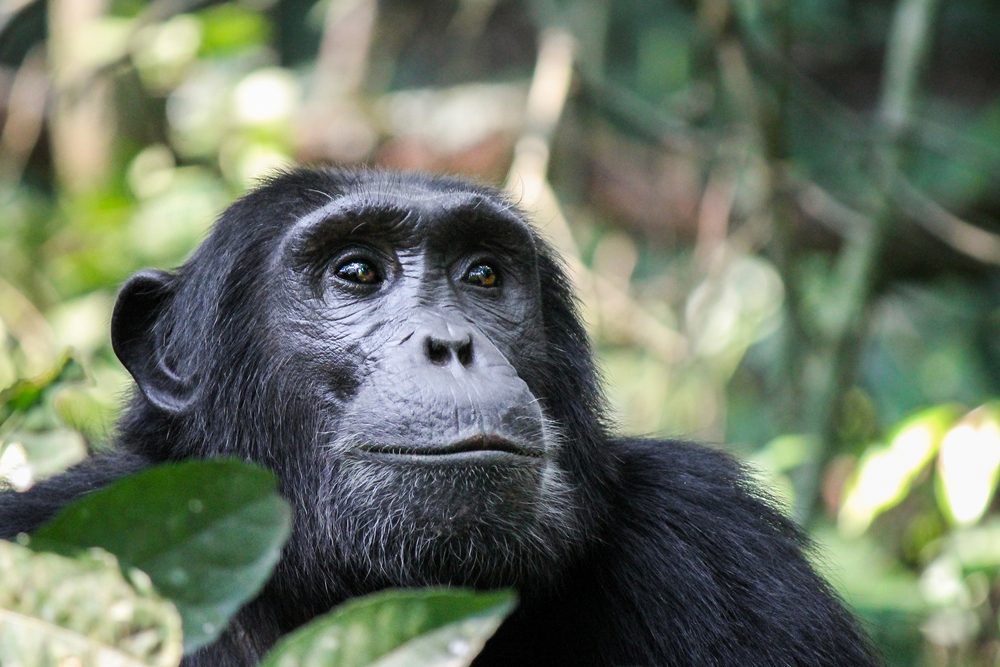
Gombe Stream National Park, officially presented today as Gombe National Park, is one of Tanzania’s most important primate destinations. The park lies beside Lake Tanganyika in western Tanzania and is internationally known for its wild chimpanzees and the pioneering research started by Dr Jane Goodall in 1960.
Gombe protects a dramatic landscape of forested valleys, steep hills, woodland, streams and sandy lakeshore. Although it is one of Tanzania’s smallest national parks, its scientific history and opportunities for guided chimpanzee trekking give it exceptional international importance.
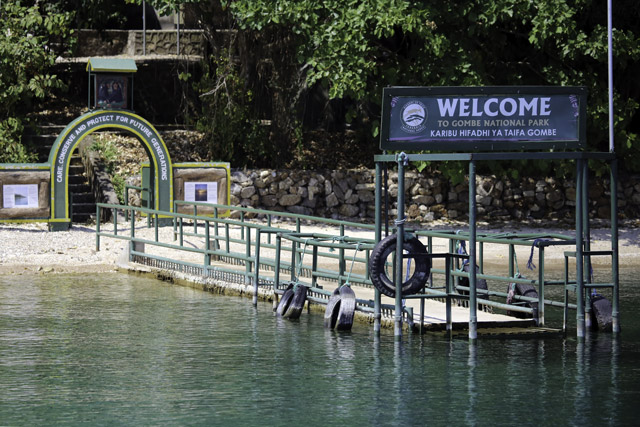
The park is accessible only by boat from Kigoma. There are no roads connecting Kigoma directly with the park, making the journey across Lake Tanganyika an essential part of the experience.
Travellers who visit Gombe Stream National Park should be physically prepared for forest hiking, steep terrain and warm, humid conditions. Chimpanzee sightings are never guaranteed, but experienced rangers use calls, tracks, feeding signs and recent movement information to locate habituated groups.
Gombe Stream National Park or Gombe National Park?
The official TANAPA website currently uses the name Gombe National Park, while Gombe Stream National Park remains widely used by travellers, safari companies and international publications.
Both names refer to the same protected area beside Lake Tanganyika.
For SEO purposes, the existing page address /gombe-stream-national-park/ can remain unchanged. The page should, however, mention the current official name so that visitors receive accurate information.
Where Is Gombe Stream National Park?
Gombe Stream National Park is located in Kigoma Region along the eastern shore of Lake Tanganyika in western Tanzania.
The park’s terrain rises steeply from the lake into forested hills and valleys. Several streams flow down toward Lake Tanganyika, creating important habitat for chimpanzees and other wildlife.
Gombe was first designated as a game reserve in 1943 and became a national park in 1968. TANAPA currently reports the protected area as approximately 52 square kilometres.
Because there is no road into the park, visitors normally travel to Kigoma by air, train or road before continuing to Gombe by boat.
Why Visit Gombe Stream National Park?
Gombe is not a traditional vehicle-based safari destination. There are no open plains filled with large herds and no conventional game-drive network.
The experience is based on:
- Chimpanzee trekking
- Guided forest hiking
- Primate watching
- Birdwatching
- Lake Tanganyika scenery
- Waterfall walks
- Conservation history
- Scientific research
- Quiet lakeside accommodation
The park is suitable for travellers interested in primates, conservation, photography and active nature experiences.
9 Extraordinary Gombe Stream National Park Experiences
1. Track Wild Chimpanzees
Chimpanzee trekking is the main attraction in Gombe Stream National Park.
After a briefing, visitors enter the forest with authorised park guides or rangers. The guides search for signs such as footprints, calls, feeding remains, nests and recent reports from trackers.
The trek may be short when chimpanzees are near the lower forest, or it may involve climbing steep hills and following narrow paths for several hours.
Once located, visitors may observe chimpanzees:
- Feeding
- Grooming
- Resting
- Climbing trees
- Communicating
- Caring for young
- Moving through the forest
- Interacting within their social groups
Chimpanzees are wild animals. Their location and behaviour cannot be controlled, and no responsible operator should guarantee a sighting.
2. Learn About Jane Goodall’s Research
Dr Jane Goodall began studying Gombe’s chimpanzees in 1960. Her detailed observations transformed scientific understanding of chimpanzee behaviour and challenged earlier ideas about the differences between humans and other animals.
The long-term research at Gombe has documented chimpanzee relationships, tool use, feeding, communication, territorial behaviour and individual life histories.
The Gombe Stream Research Centre continues this scientific work. The Jane Goodall Institute describes it as the location of the world’s longest-running study of wild chimpanzees.
Visitors should understand that active research areas and facilities may not always be open to tourists. Access depends on park rules, research needs and prior permission.
Even without entering research buildings, trekking within the landscape where this important work began gives the visit significant historical meaning.
3. Observe Chimpanzee Social Behaviour
Chimpanzees live in complex communities. Individual animals have distinct personalities, relationships and positions within the group.
During a permitted observation period, visitors may see:
- Adults grooming one another
- Mothers carrying infants
- Young chimpanzees playing
- Individuals sharing space around food
- Dominance displays
- Vocal communication
- Chimpanzees using branches or other natural materials
- Groups travelling through the forest
Visitors must remain quiet and allow the chimpanzees to behave naturally.
A chimpanzee may occasionally move closer than the recommended distance. Guests should not approach it. They must remain calm and slowly follow the ranger’s instructions.
4. Explore Lake Tanganyika by Boat
Every visit to Gombe Stream National Park includes a boat journey across Lake Tanganyika.
The lake forms the park’s western boundary and provides impressive views of forested hills descending toward the water.
Depending on the weather and boat arrangement, travellers may observe:
- Fishing boats
- Lakeside communities
- Forested escarpments
- Waterbirds
- Rocky shorelines
- Sandy beaches
- Beautiful sunsets
Boat journey times depend on the vessel, departure point and lake conditions. A private speedboat is generally faster than a public or traditional vessel.
All passengers should use a properly maintained life jacket. Boat travel may be delayed or adjusted when wind and waves create unsafe conditions.
5. Hike to Kakombe Waterfall
Kakombe Waterfall is one of Gombe’s recognised natural attractions. The guided route passes through forest vegetation and follows trails shaped by the park’s steep terrain.
The waterfall walk may be combined with chimpanzee tracking when timing, conditions and ranger instructions allow.
Visitors should wear shoes with a strong grip because rocks and paths can become slippery, particularly after rainfall.
The waterfall and surrounding forest provide opportunities to observe butterflies, plants, birds and smaller forest animals.
Walking without an authorised guide or ranger is not permitted.
6. Search for Other Primates
Chimpanzees are not the only primates found in Gombe Stream National Park.
The park also supports:
- Olive baboons
- Red-tailed monkeys
- Blue monkeys
- Red colobus monkeys
- Vervet monkeys
Some species are easier to find than others. Olive baboons are often observed around the lakeshore and visitor areas, while forest monkeys may be seen feeding or moving through the canopy.
Visitors should never feed primates. Feeding changes their behaviour, creates dependency and can increase conflict between animals and people.
Food should be stored securely because baboons and monkeys can quickly take unattended items.
7. Discover Gombe’s Birdlife
Gombe’s forest, streams and Lake Tanganyika shoreline support varied birdlife.
Possible sightings include:
- African fish eagles
- Palm-nut vultures
- Kingfishers
- Hornbills
- Bee-eaters
- Herons
- Cormorants
- Sunbirds
- Forest flycatchers
- Lake-shore waterbirds
Early mornings are generally productive because birds are more active and their calls are easier to hear.
Travellers interested in birding should bring binoculars and request a guide with knowledge of local forest and lake species.
Birdwatching can be combined with chimpanzee trekking, waterfall hikes and relaxed time along the shore.
8. Walk Through Forested Hills and Valleys
Gombe’s terrain is steep and physically demanding. Forest trails climb from the Lake Tanganyika shoreline into valleys, ridges and woodland.
The landscape includes:
- Tropical forest
- Riverine vegetation
- Woodland
- Grass-covered ridges
- Streams
- Waterfalls
- Sandy lake beaches
Hiking provides a close view of plants, insects, animal tracks and changes in forest structure.
The difficulty depends on the location of the chimpanzees, recent rain and the chosen trail. Travellers should honestly assess their mobility and fitness before booking.
Porters or additional assistance may be arranged in certain circumstances, but availability should be confirmed in advance.
9. Relax Beside Lake Tanganyika
After a demanding forest trek, visitors can relax beside Lake Tanganyika and enjoy views across one of Africa’s great lakes.
The shoreline is especially attractive during the late afternoon when changing light falls across the lake and surrounding hills.
Swimming should only take place in areas specifically approved by park authorities or accommodation staff. Conditions, currents and local wildlife risks must be considered.
Never swim alone or assume that clear water is automatically safe. Travellers should also seek medical advice about health risks associated with freshwater swimming in the region.
Chimpanzee Trekking Rules
Chimpanzees share many diseases with humans. Responsible viewing rules protect both the animals and visitors.
TANAPA’s chimpanzee-viewing guidelines require visitors to follow rules that include maintaining distance, avoiding sudden movements, not using flash photography and obeying guides. Official guidance currently limits viewing to a maximum of one hour after a group is located.
Visitors should:
- Follow the ranger’s instructions.
- Maintain the required viewing distance.
- Never touch a chimpanzee.
- Avoid sudden movements.
- Keep voices low.
- Do not use flash photography.
- Do not eat near chimpanzees.
- Never feed any animal.
- Avoid perfume while trekking.
- Carry all rubbish out of the forest.
- Cover coughs and sneezes.
- Do not trek when suffering from flu, fever or another contagious illness.
- Slowly move away if a chimpanzee approaches.
Group sizes and daily trekking places are limited. Advance reservations are strongly recommended.
Regulations can change, so Gowitos will confirm the latest TANAPA requirements when organising the safari.
Wildlife in Gombe Stream National Park
Besides chimpanzees and monkeys, the park contains smaller mammals, reptiles, amphibians and many bird species.
Possible sightings include:
- Chimpanzees
- Olive baboons
- Red-tailed monkeys
- Blue monkeys
- Red colobus monkeys
- Vervet monkeys
- Bush pigs
- Bushbucks
- Small forest antelopes
- Monitor lizards
- Snakes
- Butterflies
- Forest and lake birds
Leopards may occur in the wider ecosystem but are exceptionally difficult to see and should never be promoted as an expected sighting.
Hippos may occasionally appear near parts of the shoreline, but sightings are irregular.
Best Time to Visit Gombe Stream National Park
The park can be visited throughout the year, but rainfall affects trail conditions and trekking difficulty.
June to October: Dry Season
The dry season generally provides easier hiking conditions.
Advantages include:
- Drier forest trails
- Lower rainfall
- More comfortable boat travel
- Reduced humidity
- Easier access to waterfalls and viewpoints
- Pleasant time beside Lake Tanganyika
Chimpanzees continue to move according to food availability, so trekking may still involve climbing.
December to February: Shorter Dry Period
December through February can also offer suitable conditions, although occasional rain is possible.
This period can be considered by travellers who cannot visit between June and October.
November and March to May: Wetter Conditions
The wetter months produce lush vegetation and strong forest scenery.
Possible advantages include:
- Green landscapes
- Water flowing strongly in streams and waterfalls
- Excellent plant and insect activity
- Fewer visitors
Challenges may include:
- Muddy trails
- Slippery slopes
- Increased humidity
- Rain during treks
- More difficult boat conditions on certain days
Chimpanzees sometimes find abundant food at lower elevations during parts of the wetter season, but their movements remain unpredictable.
How to Reach Gombe Stream National Park
Step 1: Travel to Kigoma
Kigoma is the main gateway to Gombe. Travellers can reach it by:
- Scheduled or charter flight
- Train from Dar es Salaam
- Long-distance road transfer
- Lake transport from selected regional locations
Flights are normally the fastest option. Train and road journeys require significantly more time and should be planned carefully.
Step 2: Boat from Kigoma to Gombe
There is no road from Kigoma into the park. The final journey must be completed by boat across Lake Tanganyika.
Boat options may include:
- Private speedboat
- Lodge-operated boat
- Chartered local boat
- Public marine transport
Private speedboats are generally more convenient because departure times can be coordinated with flights and park activities.
Public boats may be cheaper but can be slower and operate according to local schedules. International visitors should use vessels with suitable safety equipment and avoid overloaded boats.
Suggested 3-Day Gombe Chimpanzee Safari
Day 1: Kigoma to Gombe National Park
Arrive in Kigoma and transfer to the lakeshore.
Board a private or scheduled boat for the journey across Lake Tanganyika to Gombe Stream National Park. Enjoy views of fishing villages, hills and the lake.
After arrival, complete park registration and continue to your lodge, rest house or camp.
Depending on arrival time and park arrangements, take a short guided forest walk or relax beside the lake.
Day 2: Chimpanzee Trekking and Forest Exploration
After an early breakfast, meet your ranger for a chimpanzee-trekking briefing.
Enter the forest and search for the habituated chimpanzees. Trekking duration depends on their location and movement.
Once a group is found, observe from the permitted distance and follow the official viewing-time limit.
After returning for lunch, take a guided walk toward Kakombe Waterfall or enjoy birdwatching near the lakeshore.
Return to your accommodation for dinner and overnight.
Day 3: Morning Activity and Return to Kigoma
Begin the morning with a second chimpanzee trek, nature walk or birdwatching activity, depending on your arrangement.
A second trek can improve the overall experience because each chimpanzee encounter is different and sightings are never guaranteed.
After the activity, return to the accommodation, collect your luggage and travel by boat to Kigoma.
Transfer to your hotel, airport or next destination.
Accommodation in Gombe Stream National Park
Accommodation choices are limited because of the park’s small size and remote location.
Options may include:
Tented Accommodation
Tented camps or seasonal properties can provide beds, private or shared bathroom facilities and prepared meals close to the forest and lake.
TANAPA Rest Houses
Park-operated accommodation may offer simpler rooms and basic facilities. Availability and current booking procedures should be confirmed before travel.
Camping
Camping may be possible at designated areas with advance permission. Facilities can be basic, and all supplies may need to be transported by boat.
Accommodation in Kigoma
Travellers can stay in Kigoma before or after visiting Gombe. Attempting a rushed day trip depends heavily on boat timing and may provide insufficient flexibility for chimpanzee trekking.
At least two nights in or near the park are recommended.
What to Pack for Gombe
Recommended items include:
- Lightweight neutral clothing
- Long trousers
- Long-sleeved shirt
- Strong hiking shoes
- Gaiters if available
- Waterproof jacket
- Small backpack
- Refillable water bottle
- Sun hat
- Sunglasses
- High-SPF sunscreen
- Insect repellent
- Binoculars
- Camera without flash
- Spare batteries
- Personal medication
- Walking pole
- Gardening-style gloves for steep vegetation
- Waterproof bag for electronics
- Face covering if required by current regulations
Soft-sided luggage is easier to manage during boat transfers.
Physical Fitness and Trekking Conditions
Chimpanzee trekking in Gombe can be physically demanding.
Visitors may encounter:
- Steep climbs
- Humid conditions
- Muddy ground
- Exposed roots
- Dense vegetation
- Stream crossings
- Slippery rocks
- Several hours of walking
The location of the chimpanzees determines the difficulty. They may be near the lower forest one day and high on a ridge the next.
Travellers with mobility, heart, breathing or balance concerns should speak with their doctor and tour operator before booking.
A slow pace, enough water and suitable footwear make the trek safer and more comfortable.
Responsible Chimpanzee Tourism
Chimpanzee tourism can support conservation, park employment and scientific research when carefully managed.
Visitors can contribute by:
- Following all ranger instructions.
- Respecting viewing limits.
- Staying home when ill.
- Keeping the forest free from rubbish.
- Avoiding single-use plastic.
- Never feeding wildlife.
- Not imitating aggressive chimpanzee calls.
- Keeping photography equipment under control.
- Remaining on authorised trails.
- Supporting trained Tanzanian guides.
- Choosing responsible accommodation and boat operators.
Chimpanzees remain wild even after years of habituation. TANAPA warns visitors to follow guides because habituated animals retain their natural wild behaviour.
Combining Gombe with Other Destinations
Gombe Stream National Park can be combined with:
- Kigoma historical and cultural sites
- Lake Tanganyika
- Mahale Mountains National Park
- Katavi National Park
- Serengeti National Park
- Zanzibar Island
- A longer western Tanzania safari
Combining Gombe with Mahale provides two different chimpanzee-trekking environments, although transport arrangements require careful planning.
Travellers can also add Serengeti National Park before travelling west or finish the journey with a relaxing stay on Zanzibar Island.
Frequently Asked Questions
Is Gombe Stream National Park the official name?
The park is currently presented by TANAPA as Gombe National Park. Gombe Stream National Park is the historic and internationally recognised name for the same protected area.
Are chimpanzee sightings guaranteed?
No. The chimpanzees are wild and move freely through the forest. Experienced trackers improve the chances of finding them, but sightings can never be guaranteed.
How many days should I spend in Gombe?
Three days and two nights provide a practical introduction. Travellers strongly interested in chimpanzees should consider an additional day.
Can I drive to Gombe?
No. There is no road into the park from Kigoma. The final transfer must be completed by boat across Lake Tanganyika.
Is chimpanzee trekking difficult?
It can be challenging because the park contains steep hills, humid forest and slippery trails. The difficulty depends on where the chimpanzees are located.
Can children join chimpanzee trekking?
Age restrictions may apply under TANAPA regulations. Families must confirm the current minimum age before booking.
How close can visitors get to chimpanzees?
Visitors must maintain the distance established by TANAPA and follow ranger instructions. If an animal approaches, guests should remain calm and slowly move as directed.
Can I use flash photography?
No. Flash photography is prohibited during chimpanzee viewing.
Can I trek when I have a cold?
No. Chimpanzees can catch human respiratory illnesses. Travellers with flu, fever, coughing or other potentially contagious symptoms should not participate.
Is Gombe suitable for a day trip?
A day trip may be technically possible with carefully arranged private transport, but it leaves little flexibility for weather, boat travel and chimpanzee movements. Staying inside or near the park is strongly recommended.
What is the difference between Gombe and Mahale?
Both parks offer chimpanzee trekking beside Lake Tanganyika. Gombe is smaller and closely associated with Jane Goodall’s long-term research. Mahale is much larger and combines mountain wilderness, beaches and chimpanzee trekking.
Plan Your Gombe Chimpanzee Safari with Gowitos
Gombe Stream National Park offers one of Tanzania’s most meaningful wildlife experiences. Its chimpanzees, forested valleys, scientific history and Lake Tanganyika setting create a journey completely different from a conventional savannah safari.
Gowitos Safaris and Holidays can arrange flights or transfers to Kigoma, private boat transport, park permits, accommodation and guided chimpanzee trekking.
Visit Gowitos Safaris and Holidays to explore additional Tanzania wildlife and cultural experiences.
Contact Gowitos Safaris and Holidays
- WhatsApp: +255 769 100 815
- Email: info@gowitossafarisandholidays.com
- Website: gowitossafarisandholidays.com
