
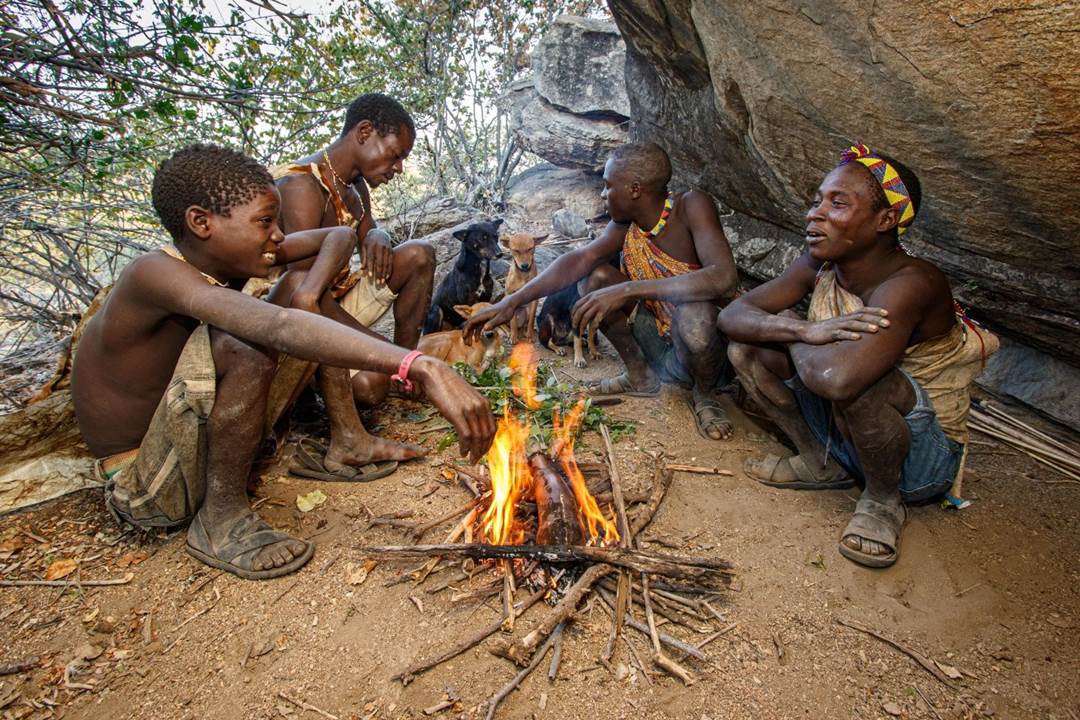
Lake Eyasi is a peaceful cultural destination on the floor of Tanzania’s Great Rift Valley. Situated southwest of the Ngorongoro Highlands, the shallow seasonal salt lake is surrounded by acacia woodland, palm trees, farms, rocky slopes and small communities.
The destination is best known for respectful cultural visits with the Hadzabe and Datoga. The Hadzabe are associated with hunter-gatherer traditions and detailed environmental knowledge, while the Datoga are traditionally known for livestock keeping, agriculture and skilled metalwork.
Unlike Serengeti and Ngorongoro, Lake Eyasi is not primarily a big-game destination. Travellers visit to learn about local cultures, explore the landscape on foot, photograph changing lake scenery and experience a quieter part of northern Tanzania.
Tanzania’s official tourism information describes Lake Eyasi as a shallow, seasonal, endorheic salt lake located south of Serengeti National Park and immediately southwest of the Ngorongoro Crater.
Where Is Lake Eyasi?
Lake Eyasi is located in the Eyasi-Wembere branch of the Great Rift Valley in northern Tanzania. It lies below the Serengeti Plateau and southwest of the Ngorongoro Conservation Area.
The lake has no natural outlet to the sea. Water levels depend heavily on seasonal rivers and rainfall. Its appearance can therefore change dramatically throughout the year.
During wet periods, the lake expands and attracts waterbirds. In dry years, large areas may become exposed, creating open salt flats and mud surfaces. Visitors should not expect the lake to look exactly like photographs taken during a different season.
The destination is normally reached through Karatu and can easily be included between Lake Manyara, Ngorongoro and Serengeti.
Why Visit Lake Eyasi?
Lake Eyasi provides a cultural and scenic contrast to a traditional Tanzania wildlife safari. Instead of spending the entire day inside a safari vehicle, visitors can walk with local guides, meet community members and learn about skills connected with the surrounding environment.
The destination is suitable for:
- Cultural travellers
- Photographers
- Birdwatchers
- Families with older children
- Returning Tanzania visitors
- Travellers interested in indigenous knowledge
- Guests seeking quieter destinations
- People combining culture with a wildlife safari
The most rewarding visits normally include at least one overnight stay. This allows travellers to begin cultural activities early in the morning before temperatures become uncomfortable.
9 Remarkable Lake Eyasi Experiences
1. Meet the Hadzabe Community
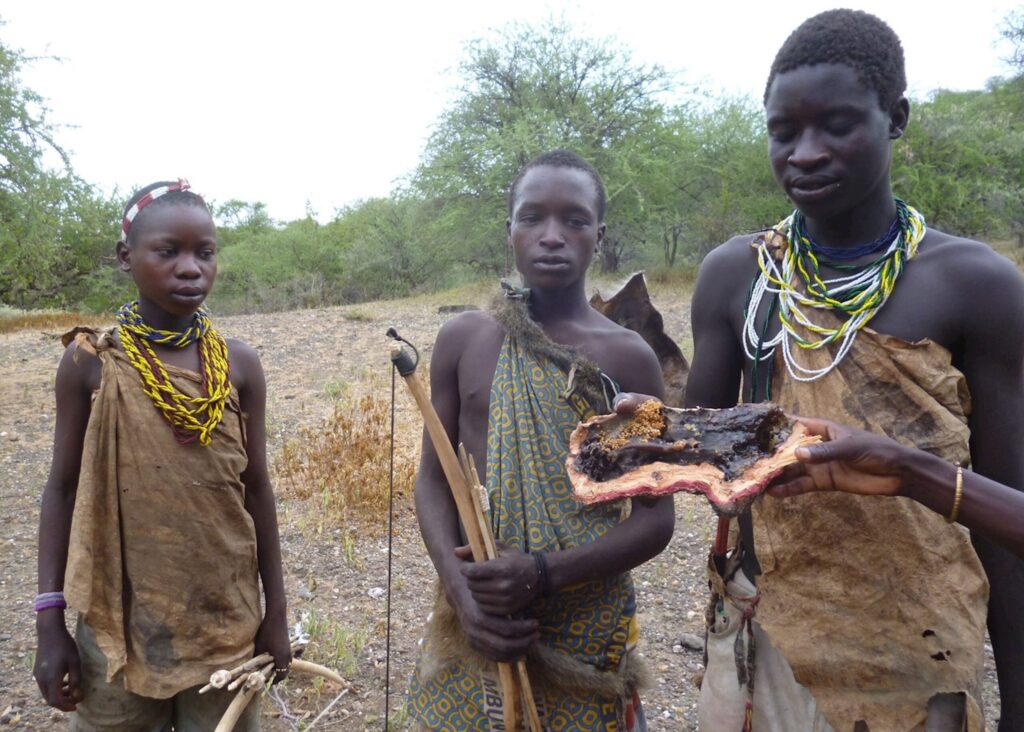
The Hadzabe, also called the Hadza, are an indigenous Tanzanian community associated with the wider Lake Eyasi region.
Some families continue to obtain part of their food through hunting, collecting honey and gathering wild fruits, roots and other plants. Their knowledge of animal tracks, seasonal water sources and the local landscape has been developed across generations.
A responsible visit is arranged through community representatives and a trained local interpreter. Visitors may learn about language, food sharing, natural materials and the construction of bows and arrows.
The Hadzabe are contemporary people rather than a community “frozen in the past.” Families make different choices about education, work, tourism and traditional practices. A respectful tour should recognise this diversity.
2. Join an Early-Morning Bush Walk
A guided morning walk is one of the most interesting Lake Eyasi activities. Hadzabe community members may demonstrate how they identify animal tracks, locate useful plants and navigate through the bush.
Activities vary according to the season and what the community is doing that morning. The walk does not follow a fixed tourist schedule.
Visitors should be prepared for:
- An early departure
- Uneven ground
- Thorny vegetation
- Warm temperatures
- A flexible walking distance
- Changing daily activities
Closed walking shoes, a hat and drinking water are essential.
Some walks may involve observing subsistence hunting. Guests should discuss this with the tour operator before booking if they are uncomfortable witnessing hunting activities. Visitors do not hunt animals themselves.
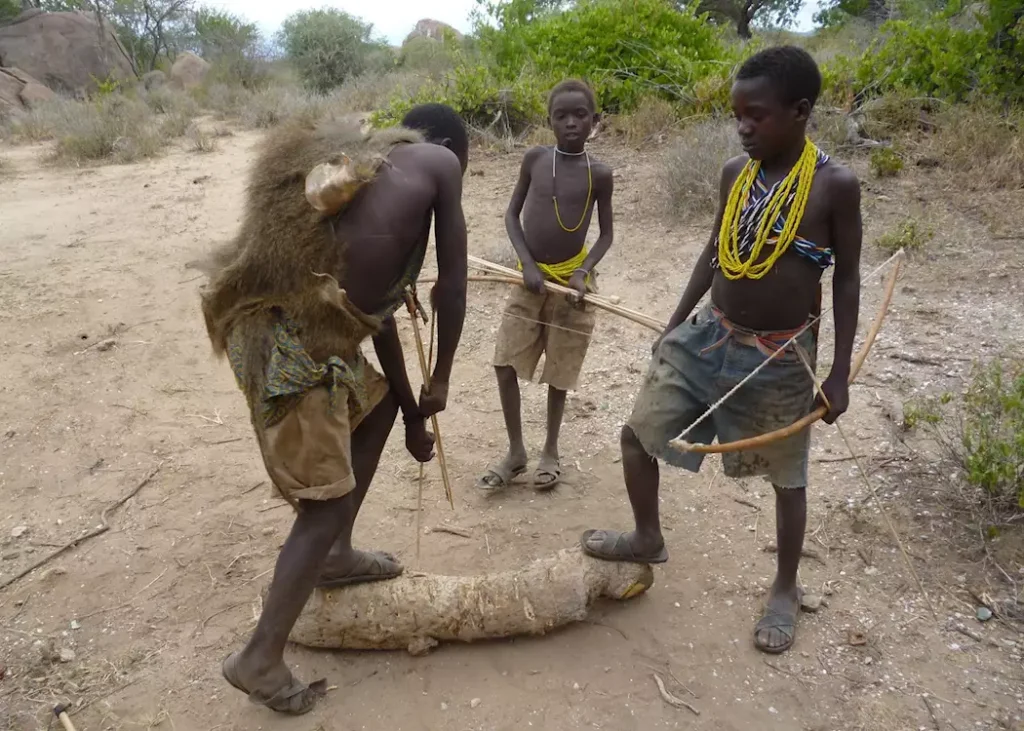
3. Learn Traditional Archery
During a Hadzabe visit, community members may explain how traditional bows and arrows are constructed and used.
Visitors are sometimes invited to practise aiming at a safe stationary target. This activity should always be supervised and conducted away from people, livestock and wildlife.
Traditional archery requires considerable accuracy, patience and physical control. Trying it safely helps visitors understand the skill involved without treating hunting equipment as a souvenir or toy.
Always wait for permission before handling a bow or arrow.
4. Visit a Datoga Homestead
The Datoga are another important community living around Lake Eyasi and neighbouring valleys. They have cultural traditions connected with livestock, agriculture, leatherwork and metal craftsmanship.
A guided homestead visit may introduce travellers to family life, house construction, food preparation and livestock management.
The visit should be based on consent and respectful communication. A local guide can translate questions and explain appropriate behaviour.
Travellers should remember that a homestead is a private living space. Do not enter buildings, photograph residents or touch personal belongings without permission.
5. Watch Datoga Metalworkers
Metalworking is one of the best-known Datoga cultural experiences. Skilled artisans use heat, hand tools and repeated hammering to turn recycled metal into useful items.
Depending on the household, visitors may see the production of:
- Bracelets
- Rings
- Knives
- Tools
- Arrowheads
- Decorative items
The demonstration shows how materials can be reused through practical knowledge and careful craftsmanship.
Travellers may be able to purchase finished products directly from the artisan. Prices should be negotiated politely, without aggressive bargaining that undervalues the time and skill required.
6. Explore the Lake Shore
The shoreline provides opportunities for walking, landscape photography and birdwatching. Its appearance changes according to rainfall and seasonal water levels.
In wet periods, visitors may see water, green vegetation and feeding birds. During dry conditions, the scenery can include salt flats, exposed soil and distant hills.
The lake is shallow and its shores may be muddy or unstable. Travellers should follow a local guide rather than walking into unfamiliar areas alone.
Sunrise and sunset often provide the best light for photography. The colours of the sky, water and surrounding escarpments can change quickly.
7. Search for Lake Eyasi Birdlife
Lake Eyasi and its surrounding habitats attract resident and migratory birds.
Species vary with rainfall, water levels and season, but visitors may encounter:
- Flamingos
- Pelicans
- Storks
- Herons
- Egrets
- African spoonbills
- Lovebirds
- Kingfishers
- Bee-eaters
- Birds of prey
Palm trees near the lake provide habitat for several bird species, while open water and wetland areas can attract seasonal waterbirds.
Tanzania Tourism highlights Lake Eyasi’s palm-lined scenery and birdlife, including Fischer’s lovebird.
Bird numbers are never guaranteed. Water levels can change considerably between seasons and from one year to another.
8. Take a Guided Nature Walk
The wider Lake Eyasi area is well suited to walking. A local guide can explain plants, farming practices, geology and the relationship between people and the Rift Valley landscape.
Walks may pass through:
- Acacia woodland
- Agricultural land
- Palm-lined areas
- Rocky terrain
- Village paths
- Seasonal streams
- Lake-shore environments
The route should be chosen according to temperature, weather and the visitors’ fitness. Early morning and late afternoon are generally more comfortable than midday.
Official Tanzania tourism guidance also identifies the Lake Eyasi region as suitable for exploration on foot.
9. Photograph the Great Rift Valley Landscape
Lake Eyasi has a visual character that differs from Tanzania’s famous savannah parks. Its shallow water, changing shorelines, mountains, palms and open sky create strong landscape-photography opportunities.
Interesting subjects include:
- Sunrise over the lake
- Reflections after rainfall
- Rift Valley escarpments
- Salt and mud patterns
- Silhouetted palm trees
- Traditional metalwork
- Birdlife
- Daily community activities
Permission must be obtained before photographing individuals, homes or cultural activities. A camera should support respectful observation rather than dominate the visit.
Hadzabe and Datoga Cultural Visits
The Hadzabe and Datoga are separate communities with different languages, social traditions and histories. They should not be described as a single tribe.
A well-organised cultural itinerary may include time with both communities:
- A morning walk and cultural exchange with Hadzabe hosts
- An introduction to traditional tracking and gathering knowledge
- Supervised archery practice
- A Datoga homestead visit
- A metalworking demonstration
- Conversation through a local interpreter
For more detailed information, read our guide to the Hadzabe and Datoga.
Responsible Cultural Tourism at Lake Eyasi
Cultural tourism can provide income and encourage meaningful exchange, but it must be managed respectfully.
Visitors should:
- Use recognised local guides.
- Pay agreed community fees.
- Ask before taking photographs.
- Respect private homes and ceremonies.
- Avoid demanding staged performances.
- Listen without judging unfamiliar customs.
- Keep group sizes manageable.
- Dress appropriately.
- Avoid distributing sweets or money to children.
- Purchase crafts directly from artisans when possible.
- Accept when a person does not want to participate.
- Avoid descriptions such as “primitive” or “Stone Age people.”
Communities must be able to decide when, where and how visits take place.
Random gift-giving can create conflict or encourage begging. Travellers wishing to make a contribution should speak with community representatives or their tour operator.
Best Time to Visit Lake Eyasi
Lake Eyasi can be visited during most months, but the experience changes with the seasons.
June to October: Dry Season
The dry season generally provides the easiest travel conditions.
Advantages include:
- Lower rainfall
- Better road access
- Comfortable morning walks
- Easy combination with wildlife safaris
- Clear landscape views
- Reduced humidity
Afternoons can be hot, so cultural walks should start early.
The lake may shrink considerably during the dry season. Travellers should visit for the complete landscape and cultural experience rather than expecting a large body of water.
November to March: Green Season
Short seasonal rains normally begin around November, although timing varies.
The green season may provide:
- Fresh vegetation
- Increased bird activity
- Dramatic skies
- Attractive photographic light
- Greener landscapes
Roads can become muddy after heavy rain, but visits are usually still possible with suitable vehicles.
April and May: Long Rains
April and May commonly receive heavier rainfall. Unpaved roads can become difficult, and some outdoor activities may need to be adjusted.
Tanzania Tourism notes that these months can be less reliable for Lake Eyasi travel because of the long rains.
Visitors travelling during this period should confirm road access, accommodation and activity availability before departure.
How to Reach Lake Eyasi
From Karatu
Karatu is the most convenient starting point. The drive generally takes around two hours, but travel time depends on weather, road conditions and the exact destination near the lake.
Because Hadzabe visits often start around sunrise, staying overnight near Lake Eyasi is more comfortable than leaving Karatu very early.
From Arusha
A direct journey from Arusha takes several hours. Attempting the return trip and cultural activities in one day can feel rushed.
A two-day tour with one night near the lake is recommended.
From Ngorongoro
Lake Eyasi can be visited after exploring Ngorongoro Crater. Travellers can descend from the highlands toward Karatu and continue southwest to the lake.
From Lake Manyara
The destination can also be combined with Lake Manyara National Park. The route usually passes through or near Karatu before continuing toward Lake Eyasi.
A four-wheel-drive vehicle is advisable, especially during rainy periods.
Suggested 2-Day Lake Eyasi Itinerary
Day 1: Karatu to Lake Eyasi
After breakfast, leave Karatu and drive toward Lake Eyasi through farms, villages and Great Rift Valley scenery.
Arrive at your lodge or tented camp in time for lunch. During the afternoon, take a guided nature walk, visit the lake shore or learn about local farming activities.
Return to the accommodation for dinner and an early night.
Day 2: Hadzabe and Datoga Experience
Wake before sunrise and drive with a local guide to meet a Hadzabe community.
Join a guided bush walk and learn about tracking, plants, traditional archery and environmental knowledge. The exact activities depend on the community and conditions that morning.
Continue to a Datoga homestead for a respectful cultural introduction and metalworking demonstration.
After the visit, return for breakfast or lunch before travelling to Karatu, Ngorongoro or your next safari destination.
Accommodation Near Lake Eyasi
Comfortable Safari Lodges
Lodges may provide private rooms, ensuite bathrooms, prepared meals and views across the surrounding landscape. These are suitable for travellers seeking comfort after long safari days.
Tented Camps
Tented camps combine basic safari comfort with a stronger connection to the natural surroundings. Facilities and operating seasons vary between properties.
Budget Guesthouses
Simpler accommodation may be available in settlements around the lake. These options can suit travellers prioritising affordability over luxury facilities.
Before booking, confirm whether the price includes:
- Meals
- Cultural activities
- Local guide fees
- Community contributions
- Drinking water
- Transport
- Government taxes
What to Pack
Recommended items include:
- Lightweight neutral-coloured clothing
- Comfortable closed walking shoes
- Sun hat
- Sunglasses
- High-SPF sunscreen
- Insect repellent
- Refillable water bottle
- Camera
- Binoculars
- Small day bag
- Personal medication
- Light rain jacket
- Warm layer for early mornings
- Respectful clothing for community visits
Avoid camouflage clothing and outfits that may be considered inappropriate in rural communities.
Combining Lake Eyasi with a Safari
Lake Eyasi works well within a northern Tanzania safari itinerary.
Popular combinations include:
- Tarangire, Lake Manyara, Lake Eyasi and Ngorongoro
- Lake Manyara, Lake Eyasi and Serengeti
- Tarangire, Lake Eyasi and Ngorongoro
- Serengeti, Ngorongoro and Lake Eyasi
- Lake Eyasi followed by Zanzibar
A cultural visit provides a useful contrast after several days of wildlife viewing.
Travellers can visit Serengeti National Park before or after Lake Eyasi, depending on their route.
Frequently Asked Questions
Is Lake Eyasi worth visiting?
Yes, particularly for travellers interested in culture, walking, photography and quieter destinations. It is different from a conventional wildlife park and should be visited with appropriate expectations.
What is Lake Eyasi famous for?
The destination is best known for its seasonal salt lake, Great Rift Valley scenery, birdlife and cultural visits with Hadzabe and Datoga communities.
Is Lake Eyasi inside Ngorongoro Conservation Area?
No. It is located southwest of the Ngorongoro Highlands and is a separate destination, although the two areas are easy to combine.
How many days are needed?
Two days and one night provide enough time for an introduction. Two nights allow a more relaxed visit with additional walking and lake exploration.
Can I visit as a day trip from Karatu?
Yes, but the day starts very early. Staying overnight near Lake Eyasi allows easier access to morning cultural activities.
Can I visit from Arusha in one day?
It is technically possible but not recommended because of the long return journey. A two-day itinerary is more comfortable and meaningful.
Is Lake Eyasi a wildlife safari destination?
It is not a major big-game destination. Birdlife, small animals and occasional wildlife may be seen, but the main attractions are culture, scenery and walking.
Can children visit?
Yes. However, parents should consider early starts, heat, uneven terrain and the possibility of witnessing real subsistence activities. Children must remain supervised.
Can visitors photograph the Hadzabe and Datoga?
Only with permission. Ask through the local guide before taking photographs or videos, especially around homes and children.
What type of vehicle is recommended?
A four-wheel-drive vehicle is recommended because some access roads are unpaved and conditions can deteriorate during the rainy season.
Is the lake always full of water?
No. Lake Eyasi is shallow and seasonal. Its water level changes considerably according to rainfall, and large areas can become dry or exposed.
Plan Your Lake Eyasi Tour with Gowitos
Lake Eyasi is ideal for travellers seeking more than wildlife sightings. Its changing scenery, birdlife, walking opportunities and cultural diversity create a deeper understanding of northern Tanzania.
Gowitos Safaris and Holidays can arrange a private Lake Eyasi tour with community-approved guides, accommodation and four-wheel-drive transport. The itinerary can be combined with Tarangire, Lake Manyara, Serengeti and Ngorongoro.
Visit Gowitos Safaris and Holidays to explore additional Tanzania safari and cultural experiences.
Contact Gowitos Safaris and Holidays
- WhatsApp: +255 769 100 815
- Email: info@gowitossafarisandholidays.com
- Website: gowitossafarisandholidays.com
