

Mount Meru is Tanzania’s second-highest mountain and one of East Africa’s most rewarding high-altitude treks. Rising to approximately 4,566 metres above sea level, the mountain dominates the landscape of Arusha National Park and provides views of volcanic cliffs, forested slopes, wildlife and neighbouring Mount Kilimanjaro.
Unlike Kilimanjaro, Mount Meru receives fewer climbers and has only one principal summit route—the Momella Route. The complete climb normally takes three or four days, although Tanzania National Parks recommends four days to provide better acclimatisation and reduce the risk of altitude sickness.
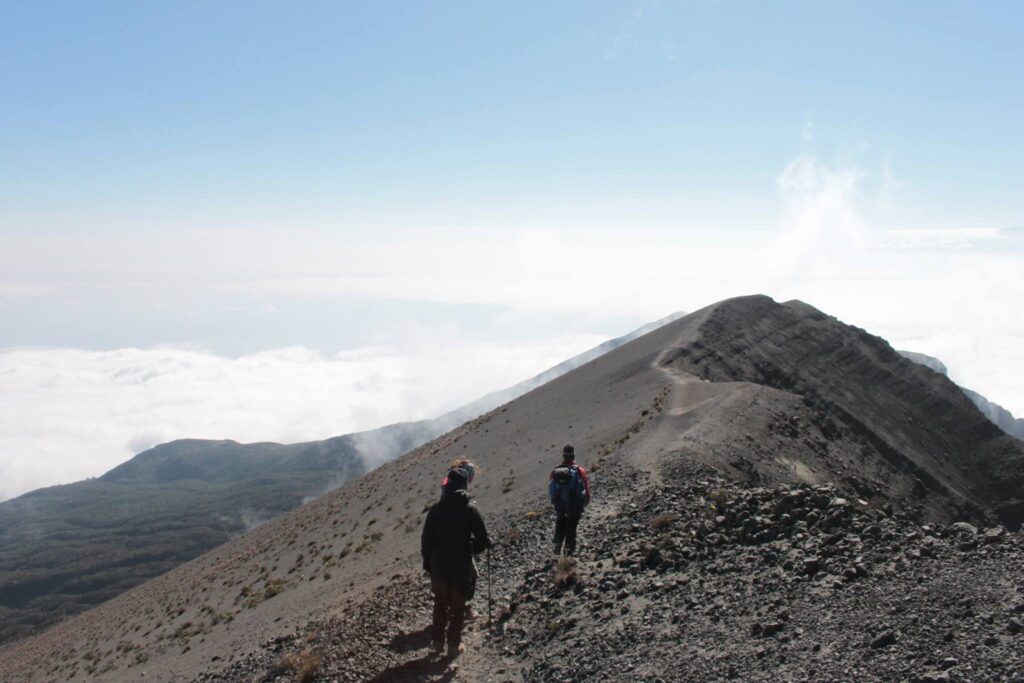
The trek begins in a wildlife-rich national park, passes through montane forest and heathland, and finishes with a demanding ascent along the crater rim to Socialist Peak.
Mount Meru is suitable for experienced hikers, travellers preparing for Kilimanjaro and adventurous visitors seeking a less crowded Tanzania mountain experience.
Where Is Mount Meru?
Mount Meru is located inside Arusha National Park in northern Tanzania. The park is easily reached from Arusha city and is also accessible from Moshi and Kilimanjaro International Airport.
The mountain forms the central feature of Arusha National Park. Its lower slopes contain savannah, woodland and montane forest, while higher sections transition into heath, moorland and exposed volcanic terrain.
Mount Meru is a large stratovolcano with a dramatic horseshoe-shaped crater. Its last known ash eruption occurred in 1910. TANAPA describes the mountain as having three distinct geological features: the main Meru cone, Little Meru and the Ash Cone.
How High Is Mount Meru?
The official height is generally given as approximately 4,566 metres or 14,980 feet above sea level.
Small differences of one or several metres appear between maps and tourism publications. These differences result from measurement methods and rounding rather than different mountains or summit points.
The highest point is known as Socialist Peak.
Mount Meru is:
- Tanzania’s second-highest mountain
- Lower than Mount Kilimanjaro
- A high-altitude trekking destination
- Challenging enough to require proper acclimatisation
- Commonly used as preparation for Kilimanjaro
Although lower than Kilimanjaro, it should not be considered an easy mountain.
9 Epic Reasons to Climb Mount Meru
1. Experience Tanzania’s Second-Highest Mountain
Standing at approximately 4,566 metres, Mount Meru offers a serious high-altitude challenge without requiring a week-long itinerary.
The ascent involves:
- Long hiking days
- Significant elevation gain
- Steep volcanic terrain
- Cold summit conditions
- Night-time climbing
- An exposed summit ridge
- Possible altitude symptoms
Most climbers do not require specialised mountaineering equipment under normal conditions. However, sections near the summit can involve steep hiking and scrambling over rocks.
Good fitness, suitable equipment and an authorised mountain team are essential.
2. Walk Through Wildlife-Rich Arusha National Park
The first stage of the climb passes through Arusha National Park, where hikers may encounter wildlife such as:
- Buffaloes
- Giraffes
- Zebras
- Warthogs
- Bushbucks
- Black-and-white colobus monkeys
- Blue monkeys
- Baboons
- Antelopes
- Numerous bird species
An armed park ranger accompanies trekking groups through wildlife areas. The ranger is present for safety and also provides information about animals, plants and the park’s ecosystem.
Wildlife sightings are never guaranteed, but the possibility of seeing large animals on foot makes the Mount Meru climb different from many other mountain treks.
Official Tanzania tourism information confirms that climbers must be accompanied by an armed ranger while travelling through Arusha National Park.
3. Explore Dramatic Volcanic Scenery
Mount Meru is an impressive volcanic landscape shaped by eruptions, collapse and erosion.
The mountain contains:
- A large horseshoe-shaped caldera
- A central ash cone
- Steep internal crater walls
- Layers of lava and ash
- Rock ridges
- Deep valleys
- Volcanic cliffs
- Distinct vegetation zones
TANAPA reports that the exposed western crater wall rises approximately 1,300 metres and reveals layers of lava, ash deposits and volcanic structures.
The crater views become particularly dramatic during the summit stage as climbers move along the ridge toward Socialist Peak.
4. Watch Sunrise Over Mount Kilimanjaro
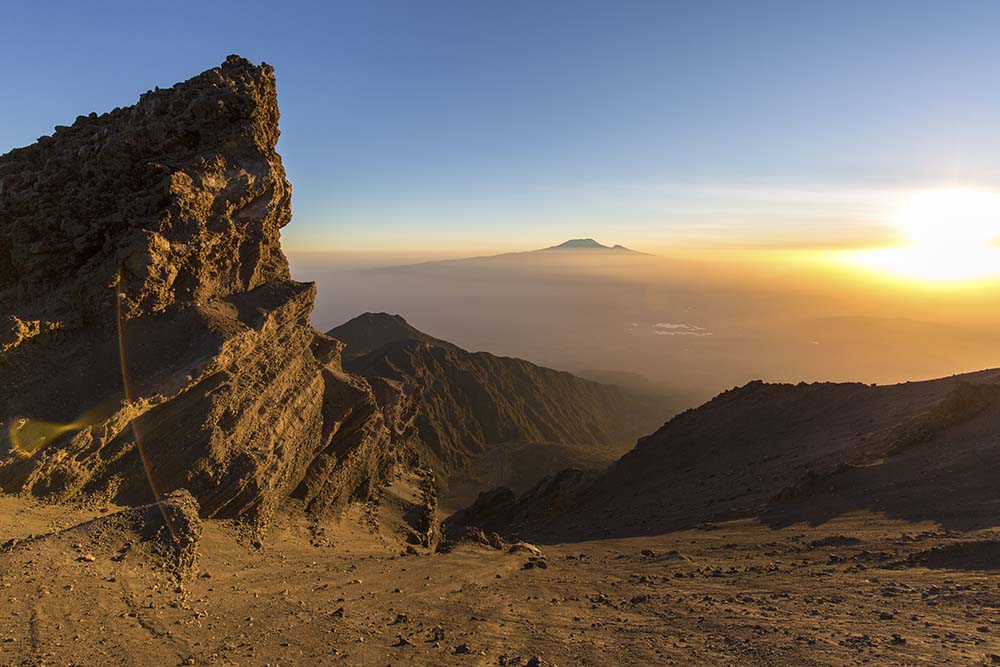
On a clear summit morning, climbers may see Mount Kilimanjaro rising above the surrounding landscape.
The summit climb normally begins shortly after midnight. If the pace and weather are favourable, trekkers reach Socialist Peak around sunrise.
Possible views include:
- Mount Kilimanjaro
- The Meru crater
- The Ash Cone
- Arusha National Park
- Distant plains
- Volcanic ridges
- Morning cloud formations
Visibility depends entirely on weather and cloud cover. No operator can guarantee a clear view of Kilimanjaro.
Even when distant views are limited, the crater rim and changing sunrise colours can provide excellent photography.
5. Prepare for a Kilimanjaro Climb
Mount Meru is frequently used as an acclimatisation trek before climbing Kilimanjaro.
Its summit reaches an altitude high enough to expose trekkers to:
- Lower oxygen levels
- Cold night-time conditions
- Long climbing days
- Mountain-hut routines
- Summit-night pacing
- Layering and equipment management
A successful Meru climb can help trekkers understand how their bodies respond to altitude before attempting Kilimanjaro.
However, completing Mount Meru does not guarantee success on Kilimanjaro. Climbers still need a well-paced Kilimanjaro itinerary with enough acclimatisation days.
Rest days should also be considered between the two climbs.
6. Hike a Quieter Mountain Route
Mount Meru generally receives fewer climbers than Mount Kilimanjaro.
The quieter trail allows trekkers to appreciate:
- Forest sounds
- Mountain scenery
- Wildlife tracks
- Volcanic formations
- Birdlife
- Peaceful hut surroundings
- Uncrowded trail sections
Groups still share the Momella Route and mountain huts, especially during popular climbing seasons. It should not be described as completely empty or isolated.
Nevertheless, the overall atmosphere is normally quieter than Kilimanjaro’s most frequently used routes.
7. Stay at Mountain Huts
The standard Mount Meru climb uses established huts rather than tents.
The two main accommodation points are:
- Miriakamba Hut, at approximately 2,500 metres
- Saddle Hut, at approximately 3,570 metres
TANAPA manages these mountain facilities, and advance booking is required.
Facilities are basic and may include:
- Shared sleeping rooms
- Bunk beds
- Dining areas
- Basic toilets
- Water points
- Staff areas
Climbers should carry a warm sleeping bag and maintain realistic expectations. These are practical mountain shelters rather than hotels.
8. Climb Little Meru
Little Meru is a smaller volcanic peak near Saddle Hut, rising to approximately 3,800 metres.
Depending on arrival time, weather and the guide’s assessment, climbers may take an optional acclimatisation hike to Little Meru during the afternoon of the second day.
The excursion provides:
- Additional altitude exposure
- Views across the mountain
- A useful fitness check
- Acclimatisation before summit night
- Photography opportunities
The walk should not be forced if a climber is exhausted, dehydrated or experiencing altitude symptoms.
TANAPA identifies Little Meru as a volcanic cone reaching approximately 3,800 metres and providing views toward northern Tanzania.
9. Combine Mountain Trekking with a Tanzania Safari
Mount Meru is conveniently located near many northern Tanzania safari destinations.
After the climb, travellers can continue to:
- Arusha National Park
- Tarangire National Park
- Lake Manyara National Park
- Ngorongoro Conservation Area
- Serengeti National Park
- Lake Eyasi
- Zanzibar Island
A Mount Meru climb followed by a wildlife safari works particularly well because travellers can rest after the summit while exploring the national parks by vehicle.
The Mount Meru Momella Route
The Momella Route is the established trekking route to Socialist Peak.
It begins at Momella Gate inside Arusha National Park and passes through:
- Savannah and woodland
- Montane forest
- Miriakamba Hut
- Elephant Ridge
- Saddle Hut
- Rhino Point
- The crater-rim ridge
- Socialist Peak
The same general route is used for ascent and descent, although trail variations may be selected on the lower slopes.
The three-day version compresses the descent after the summit into a long and exhausting day. The four-day itinerary provides an additional night at Miriakamba and is the recommended option.
Recommended 4-Day Mount Meru Itinerary
Day 1: Momella Gate to Miriakamba Hut
After breakfast in Arusha, drive to Arusha National Park and complete registration at Momella Gate.
Meet the armed ranger, mountain guide, porters and cook before beginning the trek.
The trail passes through grassland, woodland and montane forest. Depending on the route and wildlife movement, hikers may see giraffes, buffaloes, zebras, monkeys and birds.
Arrive at Miriakamba Hut at approximately 2,500 metres for dinner and overnight.
Estimated trekking time: 4–6 hours
Accommodation: Miriakamba Hut
Meals: Lunch and dinner
Day 2: Miriakamba Hut to Saddle Hut
After breakfast, begin the climb toward Saddle Hut.
The trail becomes steeper and passes through forest before reaching heath and moorland vegetation. Climbers may stop at viewpoints overlooking the crater, Ash Cone and surrounding landscape.
Arrive at Saddle Hut at approximately 3,570 metres for lunch and rest.
If weather, time and physical condition permit, take an optional acclimatisation hike to Little Meru at approximately 3,800 metres.
Return to Saddle Hut for an early dinner and sleep before the summit attempt.
Estimated trekking time: 3–5 hours, excluding Little Meru
Accommodation: Saddle Hut
Meals: Breakfast, lunch and dinner
Day 3: Saddle Hut to Socialist Peak and Miriakamba Hut
Wake around midnight, have a light meal and begin the summit climb.
The trail passes Rhino Point and continues across steep volcanic terrain. Some sections require careful scrambling, especially in darkness or wet conditions.
Continue along the crater rim toward Socialist Peak at approximately 4,566 metres.
Weather permitting, reach the summit around sunrise and enjoy views of the crater, Ash Cone and Mount Kilimanjaro.
After photographs and a short rest, descend carefully to Saddle Hut for breakfast or lunch.
Continue down to Miriakamba Hut for dinner and overnight.
This is the longest and most physically demanding day.
Estimated trekking time: 10–14 hours
Accommodation: Miriakamba Hut
Meals: Breakfast, lunch and dinner
Day 4: Miriakamba Hut to Momella Gate
After breakfast, descend through the forest toward Momella Gate.
Wildlife and bird sightings may be possible along the lower trail. After reaching the gate, complete the park checkout and receive climbing certificates where applicable.
Meet the transfer vehicle and return to Arusha.
Estimated trekking time: 2–4 hours
Meals: Breakfast and lunch
Three-Day Mount Meru Climb
A three-day climb follows the same general route but descends from the summit to Momella Gate on the final day.
This makes summit day extremely long and demanding.
The three-day option may suit highly fit, experienced hikers with limited time, but the four-day climb is better for:
- Acclimatisation
- Recovery after summit night
- Enjoying the landscape
- Reducing exhaustion
- Safer pacing
TANAPA officially recommends four days to support acclimatisation and reduce altitude-related risk.
How Difficult Is Mount Meru?
Mount Meru is a strenuous high-altitude trek.
The route does not normally require advanced technical climbing equipment, but it is more exposed and involves more scrambling than many standard Kilimanjaro routes.
Challenges include:
- Steep ascent
- Long summit day
- High altitude
- Cold temperatures
- Loose volcanic ground
- Narrow ridge sections
- Night-time hiking
- Rapid weather changes
- Basic hut accommodation
Climbers should train before arrival. Suitable preparation includes:
- Long hill walks
- Stair climbing
- Cardiovascular exercise
- Leg-strength training
- Hiking with a daypack
- Consecutive walking days
- Balance and core exercises
Mental preparation is also important. Summit night requires patience, controlled pacing and a willingness to turn back if the guide decides conditions are unsafe.
Altitude Sickness on Mount Meru
Altitude sickness can affect anyone regardless of fitness, age or previous climbing experience.
Possible symptoms include:
- Headache
- Nausea
- Loss of appetite
- Dizziness
- Unusual fatigue
- Difficulty sleeping
- Shortness of breath
- Poor coordination
Mild symptoms can become serious if ignored.
Climbers must report symptoms honestly. Guides may slow the pace, stop the ascent or arrange a descent.
Helpful precautions include:
- Choosing the four-day itinerary
- Walking slowly
- Drinking enough water
- Eating regularly
- Avoiding alcohol before and during the climb
- Sleeping well before the trek
- Following the guide’s instructions
Prescription altitude medication should only be used after receiving professional medical advice.
Best Time to Climb Mount Meru
Mount Meru can be climbed throughout much of the year, but drier months generally provide better trail conditions.
January to Early March
This period is often relatively dry and warm. It can provide clear mornings and good mountain views.
Short rain showers remain possible.
June to October
June through October is the main dry season and one of the best periods for climbing.
Advantages include:
- Lower rainfall
- Firmer trails
- Lower humidity
- Clearer conditions
- Easier wildlife viewing on the lower slopes
Nights and early mornings can be very cold at higher elevations.
November and December
The short rains can make trails wet and slippery. Clear periods still occur, and the mountain may receive fewer visitors.
March to May
The long rains usually peak during April and May.
Heavy rain can make forest trails muddy, increase cloud cover and create difficult conditions along exposed summit sections. Climbs remain possible when authorised, but flexibility and high-quality waterproof equipment are essential.
Tanzania Tourism broadly recommends January through March and June through October for mountain and hiking activities.
Mount Meru Climb Inclusions
A professionally organised package may include:
- Return transfer from Arusha
- Arusha National Park entry fees
- Mount Meru climbing fees
- Hut accommodation fees
- Rescue fees
- Professional mountain guide
- Armed park ranger
- Porters
- Mountain cook
- Meals during the climb
- Safe drinking water
- Government taxes
- Crew salaries
- Certificate after the climb, when issued
- Basic first-aid equipment
Exact inclusions must be confirmed in the final quotation.
Mount Meru Climb Exclusions
The package may exclude:
- International flights
- Tanzania visa
- Travel insurance
- Personal climbing equipment
- Sleeping bag
- Accommodation before and after the climb
- Airport transfers unless stated
- Tips for guides, rangers, cooks and porters
- Personal medication
- Alcoholic and bottled soft drinks
- Laundry
- Additional meals in Arusha
- Emergency evacuation beyond included coverage
- Activities not listed in the itinerary
Travel insurance should specifically cover high-altitude trekking up to at least 4,600 metres.
Mount Meru Packing List
Clothing
- Waterproof jacket
- Waterproof trousers
- Warm insulated jacket
- Fleece or mid-layer
- Thermal base layers
- Trekking trousers
- Moisture-wicking shirts
- Warm hat
- Sun hat
- Insulated gloves
- Hiking socks
- Gaiters
Footwear
- Broken-in waterproof hiking boots
- Lightweight shoes for the huts
- Spare laces
Trekking Equipment
- 25–35-litre daypack
- Waterproof pack cover
- Trekking poles
- Headlamp
- Spare batteries
- Sunglasses
- High-SPF sunscreen
- Refillable water bottles or hydration bladder
- Warm sleeping bag
- Dry bags
- Personal first-aid items
Personal Items
- Passport
- Travel insurance details
- Personal medication
- Toiletries
- Quick-drying towel
- Toilet paper
- Hand sanitiser
- Camera
- Power bank
- Energy snacks
Porters carry the main duffel bag, while each climber carries personal water, rain gear, snacks, camera and items required during the day.
Wildlife and Safety
The lower slopes of Mount Meru pass through wildlife habitat inside Arusha National Park.
Buffaloes are among the animals that require particular caution. Climbers must remain with their ranger and should never approach wildlife independently.
Important safety rules include:
- Stay with the group.
- Follow the ranger’s instructions.
- Never feed wildlife.
- Keep food packed securely.
- Avoid sudden movements around animals.
- Do not leave the hut area alone after dark.
- Maintain a steady pace.
- Report altitude symptoms immediately.
- Carry enough drinking water.
- Respect turnaround decisions.
Summit success is less important than returning safely.
Mount Meru Versus Mount Kilimanjaro
| Feature | Mount Meru | Mount Kilimanjaro |
|---|---|---|
| Elevation | Approximately 4,566 metres | 5,895 metres |
| Standard duration | 3–4 days | 5–9 days |
| Main route | Momella Route | Several routes |
| Accommodation | Mountain huts | Tents or huts, depending on route |
| Wildlife | Common on lower slopes | Possible but less central to most routes |
| Armed ranger | Required through wildlife areas | Not normally required |
| Trail character | Steeper with exposed ridge sections | Varies considerably by route |
| Crowds | Generally lower | Higher on popular routes |
| Best use | Standalone climb or Kilimanjaro preparation | Africa’s highest summit |
Mount Meru should not be treated merely as practice. It is a complete mountain experience with distinct wildlife, geology and scenery.
Combining Mount Meru with Other Destinations
Popular combinations include:
- Mount Meru and Arusha National Park
- Mount Meru and Mount Kilimanjaro
- Mount Meru, Tarangire and Ngorongoro
- Mount Meru and Serengeti
- Mount Meru and Zanzibar
- Mount Meru and Lake Manyara
After the climb, one or two rest days are advisable before starting another demanding trek.
Travellers can read our Tanzania Safari Guide when planning a mountain-and-safari itinerary.
Responsible Mount Meru Trekking
Responsible trekking protects the mountain and supports the people working on it.
Climbers should:
- Use a licensed operator.
- Respect porter weight limits.
- Ensure mountain staff receive proper meals and equipment.
- Carry all rubbish down.
- Avoid single-use plastic.
- Remain on established trails.
- Do not remove rocks or plants.
- Use toilets responsibly.
- Respect wildlife and maintain distance.
- Tip the mountain team fairly.
- Avoid loud music on the trail.
- Follow all TANAPA regulations.
The montane forest around Mount Meru is an important water catchment for Arusha and surrounding communities, making responsible environmental behaviour essential.
Frequently Asked Questions
Is Mount Meru difficult to climb?
Yes. It is a strenuous high-altitude trek with steep sections, an exposed crater ridge and a long summit day. Good fitness and proper preparation are necessary.
How many days are required?
The climb takes three or four days. Four days are recommended for acclimatisation, safety and a more manageable descent.
Is Mount Meru higher than Kilimanjaro?
No. Kilimanjaro is 5,895 metres high, while Mount Meru reaches approximately 4,566 metres.
Do I need technical climbing experience?
Advanced mountaineering skills are not normally required under standard conditions. However, climbers should be comfortable with steep hiking, exposed terrain and basic scrambling.
Why is an armed ranger required?
The lower mountain route passes through wildlife habitat where buffaloes and other large animals may be present. The ranger accompanies the group for safety.
Can beginners climb Mount Meru?
Fit beginners with hiking experience can attempt the climb, but they must train properly, select the four-day route and follow their guide’s pace.
Can children climb Mount Meru?
Age and safety restrictions may apply. Parents should confirm current TANAPA requirements and carefully consider the child’s fitness and high-altitude experience.
Where do climbers sleep?
Climbers normally stay at Miriakamba Hut and Saddle Hut. Accommodation is shared and basic.
Is altitude sickness possible?
Yes. Any traveller can develop altitude sickness, even on a mountain lower than Kilimanjaro. Symptoms must be reported immediately.
Can I climb Mount Meru before Kilimanjaro?
Yes. The mountain is commonly used for acclimatisation and preparation before Kilimanjaro. Appropriate rest should be scheduled between climbs.
Are wildlife sightings guaranteed?
No. Wildlife moves freely, but giraffes, buffaloes, monkeys, antelopes and birds may be seen on the lower slopes.
What is the summit called?
The highest point is known as Socialist Peak.
Plan Your Mount Meru Climb with Gowitos
Mount Meru combines mountain trekking, wildlife, volcanic scenery and high-altitude adventure within one compact itinerary. Its quieter trail and dramatic crater make it an excellent standalone climb or preparation for Kilimanjaro.
Gowitos Safaris and Holidays can arrange the four-day Momella Route, park permits, guides, armed ranger, mountain crew, hut accommodation, meals and transfers from Arusha.
Visit Gowitos Safaris and Holidays to plan your Tanzania mountain climb and safari.
Contact Gowitos Safaris and Holidays
- WhatsApp: +255 769 100 815
- Email: info@gowitossafarisandholidays.com
- Website: gowitossafarisandholidays.com
