
Saadani National Park is Tanzania’s only coastal national park—a distinctive destination where acacia savannah, mangrove forests, rivers and the Indian Ocean exist within one protected landscape. Visitors can take a morning game drive, explore the Wami River by boat and finish the day beside the ocean.
Located on Tanzania’s northern coast between Dar es Salaam and Tanga, the park covers approximately 1,062 square kilometres. Its habitats include open grassland, miombo woodland, riverine vegetation, mangroves, coastal forest and sandy beaches.
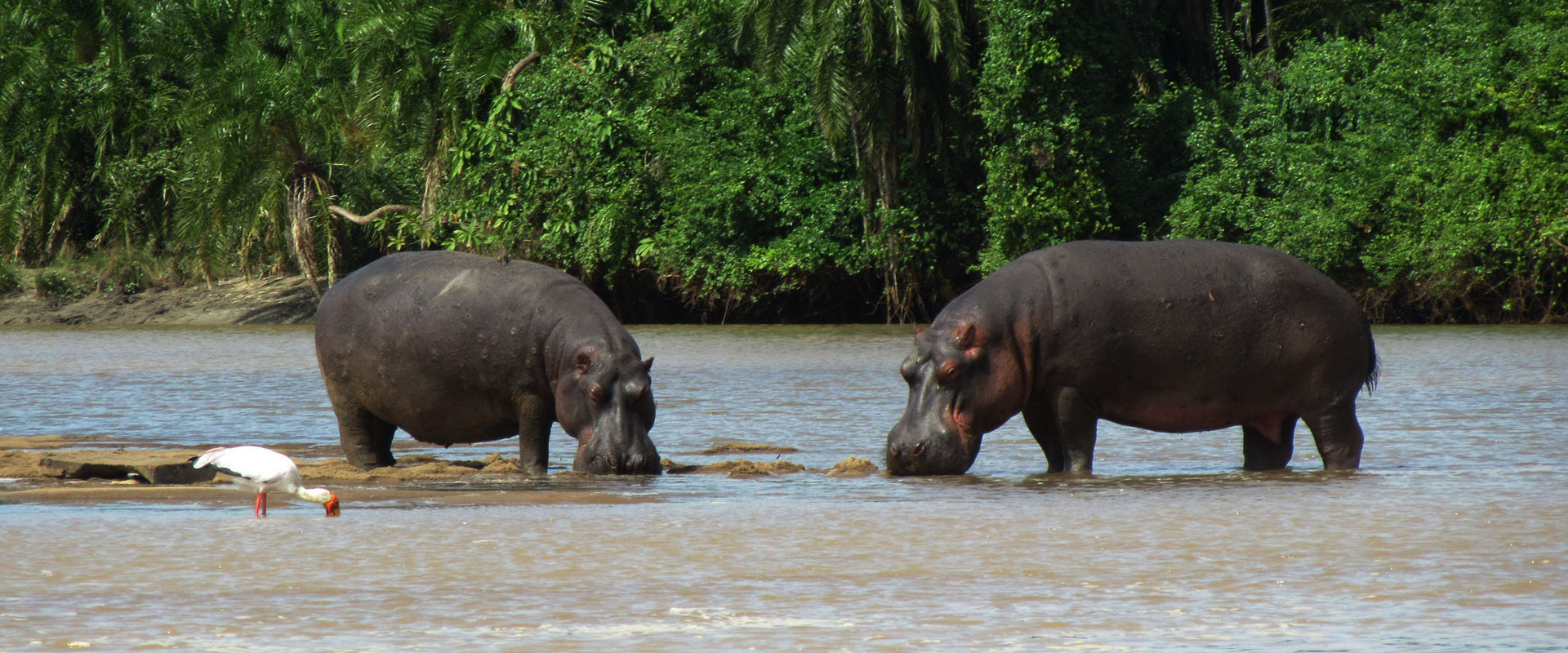
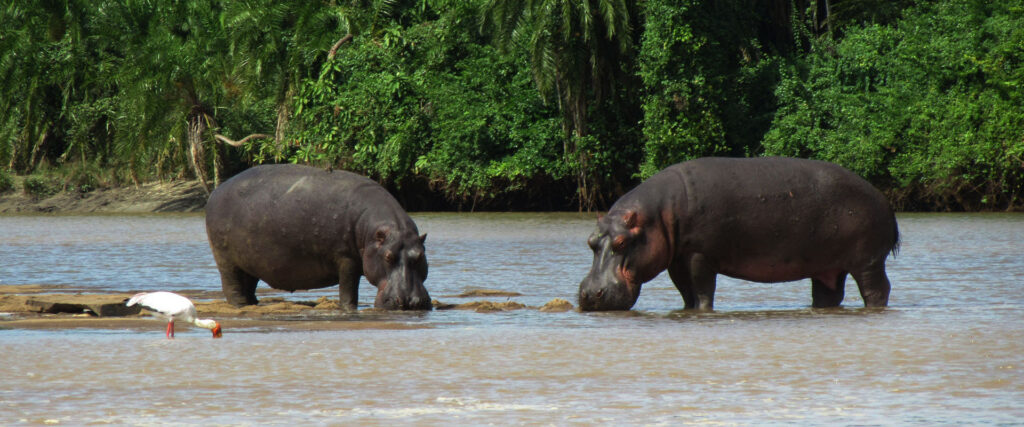
Wildlife includes elephants, giraffes, buffaloes, waterbucks, wildebeest, warthogs, lions, leopards, hyenas and several antelope species. The Wami River supports hippos, crocodiles and excellent birdlife, while the protected coastline provides nesting habitat for green turtles.
Saadani National Park is ideal for travellers who want a quiet safari close to Dar es Salaam, Bagamoyo, Tanga or Zanzibar.
Where Is Saadani National Park?
Saadani National Park is situated along Tanzania’s mainland Indian Ocean coast. It lies approximately 100 kilometres north of Dar es Salaam, although actual driving distance depends on the selected route and park entrance.
The park extends across parts of the Pwani and Tanga regions. Important natural features include:
- The Wami River and estuary
- Indian Ocean beaches
- Mangrove forests
- Zaraninge coastal forest
- Acacia savannah
- Miombo woodland
- Seasonal wetlands
- Mafui Sandbank
This mixture of coastal and terrestrial habitats makes Saadani different from Tanzania’s traditional inland safari destinations.
Tanzania National Parks officially describes Saadani as the country’s only coastal national park and highlights its combination of game drives, shoreline scenery and Wami River boat safaris.
Why Visit Saadani National Park?
Saadani is particularly suitable for travellers who want several different environments in one short itinerary.
Reasons to visit include:
- Combining a safari with coastal relaxation
- Taking a boat safari on the Wami River
- Visiting from Dar es Salaam or Bagamoyo
- Enjoying a quieter park with fewer vehicles
- Watching birds in savannah, river and coastal habitats
- Exploring Tanzania’s Swahili coast
- Looking for seasonal green-turtle nesting activity
- Adding a short safari to a Zanzibar holiday
The park should not be compared directly with Serengeti or Ngorongoro in terms of wildlife concentration. Animals are often more widely dispersed, and sightings may require additional patience.
Saadani’s strength is the complete landscape: wildlife, river, forest, beach and history rather than only the number of animals seen during one game drive.
9 Incredible Saadani National Park Experiences
1. Take a Savannah Game Drive
A game drive is the main activity in Saadani National Park. The park’s roads pass through open grassland, woodland, palm-lined areas and riverine habitats.
Possible wildlife sightings include:
- Elephants
- Giraffes
- Buffaloes
- Wildebeest
- Warthogs
- Common waterbucks
- Reedbucks
- Hartebeests
- Greater kudus
- Elands
- Sable antelopes
- Yellow baboons
- Vervet monkeys
Predators such as lions, leopards, spotted hyenas and black-backed jackals are present, but they are less predictable than in some northern Tanzania parks.
Early morning and late afternoon usually provide comfortable temperatures and better opportunities to observe active wildlife.
Tanzania’s official tourism information confirms that the park supports numerous grazers, primates, elephants and several predator species.
2. Explore the Wami River by Boat
A Wami River boat safari is one of the highlights of Saadani National Park. The river flows through mangrove and riverine habitats before reaching the Indian Ocean.
During the trip, visitors may observe:
- Hippos
- Nile crocodiles
- Monitor lizards
- Kingfishers
- African fish eagles
- Herons
- Egrets
- Storks
- Waders
- Other river and coastal birds
The scenery changes as the boat moves between freshwater and the estuary. Mangroves, exposed riverbanks and quiet channels provide a different perspective from a vehicle safari.
Boat routes and departure times depend on water levels, tides, weather and park regulations.
Visitors must remain seated when instructed and should never put their hands into the water. Hippos and crocodiles are wild animals and require a safe viewing distance.
3. Experience the Indian Ocean Coastline
Saadani National Park protects a section of Tanzania’s mainland coastline. Its beaches create the unusual possibility of moving from savannah wildlife to the Indian Ocean within the same protected area.
The coast is suitable for:
- Guided beach walks
- Landscape photography
- Birdwatching
- Relaxation
- Observing tracks in the sand
- Learning about coastal habitats
Beach conditions change with tides, wind and weather. Some areas may contain coral fragments, vegetation or natural debris and should not be expected to resemble a groomed resort beach.
Swimming should take place only in areas approved by park authorities or lodge staff. Visitors should never swim near river mouths, mangroves or locations where crocodiles may occur.
4. Look for Green Turtle Nesting Activity
Sections of Saadani’s coastline provide important nesting habitat for green turtles. Female turtles come ashore to lay eggs before returning to the ocean.
Madete Beach is one of the locations associated with green-turtle nesting. Tanzania Tourism identifies July through November as the main nesting period, with a more moderate period between January and March. Natural timing can vary.
Turtle sightings and hatchings cannot be guaranteed. They depend on nesting activity, incubation periods and conservation monitoring.
If a guided turtle activity is available:
- Keep lights low.
- Never touch a turtle or hatchling.
- Avoid flash photography.
- Remain behind the guide.
- Do not stand between a turtle and the sea.
- Keep noise to a minimum.
- Never dig into a nest.
Responsible observation helps protect the turtles during a vulnerable stage of their life cycle.
5. Discover Zaraninge Forest
Zaraninge Forest protects an important section of lowland coastal forest within Saadani National Park.
The forest’s closed canopy and dense vegetation create a sharp contrast with the park’s open savannah. It supports plants, birds, insects and animals adapted to forest conditions.
Depending on current access and authorised activities, visitors may explore selected areas with a qualified guide. Walking independently is not recommended because of wildlife, dense vegetation and the risk of becoming disoriented.
Tanzania Tourism notes that Zaraninge contains uncommon and threatened plant and animal species and can provide dry-season habitat for elephants.
6. Visit Mafui Sandbank
Mafui Sandbank lies within the park’s marine environment and is influenced by ocean tides. It can provide opportunities for relaxation, birdwatching and marine exploration when conditions are suitable.
The sandbank’s appearance and accessibility change throughout the day. At higher tide, parts of it may become submerged.
Trips must be planned according to:
- Tidal conditions
- Weather
- Sea state
- Boat availability
- Park regulations
Some excursions may include swimming or snorkelling, but water activities depend on current safety conditions.
Visitors should not collect shells, coral or marine life. Sunscreen, a hat, drinking water and protective clothing are important because the sandbank offers little natural shade.
7. Enjoy Excellent Birdwatching
Saadani National Park contains an unusual combination of inland, riverine and coastal bird habitats.
Birdwatchers may look for:
- Mangrove kingfishers
- African fish eagles
- Hornbills
- Bee-eaters
- Herons
- Egrets
- Flamingos
- Terns
- Waders
- Raptors
- Woodland species
- Migratory birds
The Wami River, estuary, beach and Zaraninge Forest each support different groups of birds.
Birdwatching is possible throughout the year. Migratory species from Europe and northern Africa may be present between November and April.
Travellers with a strong interest in birds should request a guide familiar with both coastal and savannah species.
8. Visit Saadani Village and Historical Sites
Saadani Village has a long connection with fishing, coastal trade and Swahili history. Historical remains reflect the area’s importance as a trading centre during the nineteenth century.
A guided visit may include:
- Historical ruins
- Traditional coastal houses
- Fishing activities
- Village paths
- Discussions about local history
- Swahili cultural traditions
Some historical structures are connected to the slave trade. These sites should be presented accurately and sensitively rather than treated as casual photo stops.
The village is a living community. Visitors must ask before photographing residents and should dress respectfully.
Using a knowledgeable local guide helps provide historical context while directing tourism income toward the community.
9. Combine a Wildlife Safari with Beach Relaxation
The main attraction of Saadani National Park is the combination of different environments in one journey.
A typical day could include:
- An early-morning game drive
- Breakfast overlooking the bush
- A Wami River boat safari
- Lunch at the lodge
- An afternoon beach walk
- Sunset beside the Indian Ocean
This combination works well for couples, families and travellers who have limited time but want more than a standard game drive.
However, Saadani should be viewed as a coastal wilderness rather than a conventional beach resort. Its natural shoreline, tides and wildlife are part of the experience.
Wildlife in Saadani National Park
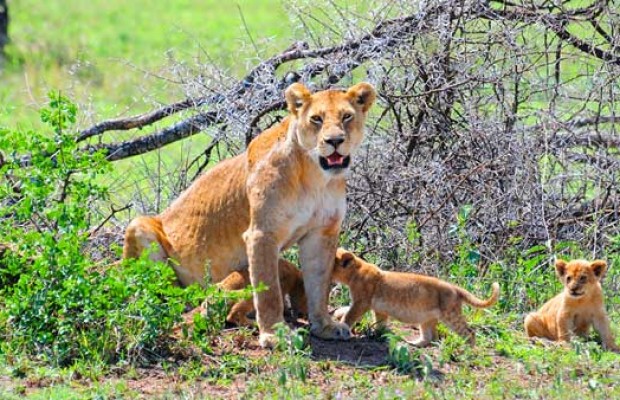
Saadani supports both terrestrial and marine ecosystems.
Animals that may be observed include:
- African elephants
- Buffaloes
- Giraffes
- Lions
- Leopards
- Spotted hyenas
- Black-backed jackals
- Wildebeest
- Warthogs
- Hartebeests
- Waterbucks
- Reedbucks
- Greater kudus
- Elands
- Sable antelopes
- Red duikers
- Yellow baboons
- Vervet monkeys
- Hippos
- Nile crocodiles
- Green turtles
Dolphins may occasionally be seen offshore, but sightings are unpredictable.
Wildlife density is generally lower than in Serengeti, Tarangire or Ngorongoro. The vegetation can also make animals more difficult to locate.
A longer stay and an experienced guide improve the chances of rewarding sightings.
Best Time to Visit Saadani National Park
Saadani can be visited throughout much of the year, but rainfall affects road access and wildlife distribution.
January and February
January and February can provide good wildlife viewing after the short rains. Vegetation may remain green, and animals can still be found within accessible areas.
The weather is generally warm and humid.
June to August
June through August is another recommended period for wildlife viewing.
Advantages include:
- Lower rainfall
- More reliable road conditions
- Comfortable game drives
- Good river activities
- Lower humidity than hotter months
- Easy combination with other Tanzania destinations
Tanzania Tourism recommends January and February and June through August for game viewing.
September and October
Conditions generally become hotter and drier. Wildlife may gather closer to dependable water sources, although animal movements vary.
This period can also fall within the main green-turtle nesting season.
November and December
The short rains can bring fresh vegetation and increased bird activity. Some roads may become muddy after heavy showers.
March to May
The long rains usually peak during April and May. Some access roads can become difficult or temporarily impassable.
The park remains officially open, but itineraries may require greater flexibility. TANAPA notes that parts of Saadani can be inaccessible during wetter periods.
How to Reach Saadani National Park
From Dar es Salaam
Saadani can be reached by road from Dar es Salaam through Bagamoyo and other coastal routes.
Travel time depends on traffic, road conditions, weather and the selected entrance gate. Travellers should avoid relying on one fixed driving time.
A four-wheel-drive vehicle is recommended, especially during or soon after rain.
From Bagamoyo
Bagamoyo is one of the most convenient starting points for a Saadani safari. The combination also allows travellers to experience the town’s coastal history.
From Tanga or Pangani
Travellers can approach the northern side of the park through Tanga and Pangani. The correct route depends on the accommodation and park gate being used.
From Zanzibar
Charter flights may connect Zanzibar with airstrips serving Saadani. Boat transfers may also be offered by selected licensed operators and lodges, depending on sea conditions and current schedules.
A sea transfer should only be booked with an established operator using suitable safety equipment.
By Air
Charter flights can operate from Dar es Salaam, Zanzibar, Arusha, Tanga and other locations to Saadani or Mkwaja airstrips. Availability depends on the operator and season.
Suggested 3-Day Saadani Safari Itinerary
Day 1: Dar es Salaam or Bagamoyo to Saadani
Meet your professional driver-guide and travel to Saadani National Park.
After arriving, complete park formalities and begin an afternoon game drive. Search for giraffes, buffaloes, elephants, waterbucks, warthogs and antelopes.
Continue to your lodge or camp for dinner and overnight.
Day 2: Game Drive and Wami River Boat Safari
Begin with an early-morning game drive when temperatures are cooler and wildlife is more active.
Return for breakfast or continue with a picnic, depending on your itinerary. Later, take a guided boat safari on the Wami River.
Look for hippos, crocodiles and river birds while exploring the mangrove-lined waterways.
Return to the accommodation for dinner and overnight.
Day 3: Beach Experience and Departure
After breakfast, enjoy a guided beach walk, short game drive or visit to Saadani Village, depending on time and local arrangements.
Depart for Bagamoyo, Dar es Salaam, Tanga or your next destination.
A longer stay can include Zaraninge Forest, turtle activities or a marine excursion when available.
Accommodation in Saadani National Park
Safari Lodges
Lodges may offer private rooms, ensuite bathrooms, prepared meals, game drives and river activities. Some properties are positioned close to the coast or Wami River.
Tented Camps
Tented camps provide a stronger bush atmosphere while retaining essential comfort. Facilities vary considerably, so travellers should confirm room type, electricity and bathroom arrangements.
Park Rest Houses and Bandas
TANAPA-operated or basic park facilities may be available according to current schedules and reservation requirements.
Campsites
Public and special campsites suit adventurous travellers. Camping must be arranged in advance and follow national park regulations.
Accommodation is available inside and outside the park, including around Saadani, Gama and Miono.
What to Pack
Recommended items include:
- Lightweight neutral safari clothing
- Warm layer for early mornings
- Comfortable closed shoes
- Sandals for permitted beach areas
- Sun hat and sunglasses
- High-SPF sunscreen
- Insect repellent
- Binoculars
- Camera and spare batteries
- Refillable water bottle
- Personal medication
- Light rain jacket
- Swimwear
- Dry bag
- Travel documents
Avoid camouflage clothing and single-use plastic where possible.
Responsible Travel Guidelines
Visitors can help protect Saadani’s wildlife and coastal environment by following these rules:
- Never feed or approach wildlife.
- Remain inside the vehicle unless your guide approves otherwise.
- Do not leave plastic or rubbish behind.
- Keep noise low at animal sightings.
- Never touch turtle nests or hatchlings.
- Avoid flash photography around nesting turtles.
- Do not collect shells, coral or plants.
- Respect village residents and ask before taking photographs.
- Use licensed boat operators.
- Follow ranger instructions near rivers and beaches.
- Do not swim near river mouths or unapproved areas.
- Purchase local crafts responsibly.
Saadani’s coastal ecosystem is sensitive. Turtle beaches, mangroves, coral areas and estuaries all require careful visitor behaviour.
Combining Saadani with Other Destinations
Popular combinations include:
- Saadani and Bagamoyo
- Saadani and Dar es Salaam
- Saadani and Zanzibar
- Saadani and Pangani
- Saadani and Mkomazi National Park
- Saadani and Nyerere National Park
- Saadani and Mafia Island Marine Park
Travellers wanting a safari followed by a developed beach holiday can combine Saadani with Zanzibar Island.
Frequently Asked Questions
What is Saadani National Park famous for?
Saadani is famous for combining savannah wildlife, the Wami River and the Indian Ocean coastline within one national park.
Is Saadani worth visiting?
Yes, especially for travellers seeking a quieter safari, river activities and coastal scenery near Dar es Salaam or Zanzibar.
Can I see the Big Five in Saadani?
Saadani should not be promoted as a dependable Big Five destination. Elephants, buffaloes, lions and leopards occur in the park, but rhinoceroses are not an expected sighting.
Are there many animals?
The park supports varied wildlife, but animals are usually less concentrated and can be harder to find than in Serengeti, Tarangire or Ngorongoro.
Can I swim at Saadani?
Swimming may be possible at approved beach locations when conditions are suitable. Never swim near the Wami River mouth, mangroves or any area not approved by park staff or lodge management.
Are boat safaris available?
Yes. Boat safaris on the Wami River are among Saadani’s signature activities. Availability depends on river conditions, water levels, weather and authorised operators.
Can I see turtles?
Green turtles nest along protected sections of the coast. Sightings and hatchings are seasonal and cannot be guaranteed.
How many days are recommended?
Two nights and three days allow time for game drives, a Wami River boat safari and a coastal activity. A day trip is possible but provides a more limited experience.
Can I visit Saadani from Zanzibar?
Yes. Charter flights and selected sea transfers may be available. Routes and schedules should be confirmed before booking.
Is Saadani suitable for children?
Yes, although parents should consider travel time, heat and safety around rivers, boats and wildlife. Age restrictions may apply to walking or marine activities.
Is the park open throughout the year?
The park is open year-round, but heavy rain—particularly in April and May—can make some roads difficult or inaccessible.
Plan Your Saadani Safari with Gowitos
Saadani National Park offers something genuinely different from Tanzania’s inland safari destinations. Its combination of game drives, Wami River boat trips, coastal forests and Indian Ocean beaches creates a varied journey in a relatively compact area.
Gowitos Safaris and Holidays can arrange private Saadani safaris from Dar es Salaam, Bagamoyo, Tanga or Zanzibar. Your trip can include transport, accommodation, park fees, game drives, boat activities and additional coastal destinations.
Visit Gowitos Safaris and Holidays to explore more Tanzania safari and beach-holiday options.
Contact Gowitos Safaris and Holidays
- WhatsApp: +255 769 100 815
- Email: info@gowitossafarisandholidays.com
- Website: gowitossafarisandholidays.com
